
Myopia Control for Kids:
Slow It Down, See It Through
Childhood myopia (nearsightedness) is rising fast — but it doesn't have to define your child's future vision. With early detection and proven management strategies, we can slow myopia progression and protect your child's eyes for life.
What Is Myopia?
Myopia — also called nearsightedness — means your child can see things up close but struggles to see far away. A chalkboard at school, road signs, or faces across a room all look blurry. It happens when the eye grows too long, causing light to focus in front of the retina instead of directly on it.

Why Is Childhood Myopia a Big Deal?
Myopia isn't just about needing glasses. The higher a child's myopia gets, the greater their risk of serious eye conditions later in life — including retinal detachment, glaucoma, cataracts, and myopic macular degeneration.
The key insight: myopia progresses fastest in children under 10. Every additional dioptre of myopia increases the risk of complications. That's why early detection and intervention matter so much — the goal isn't just better vision today, but healthier eyes for decades to come.
Research from the International Myopia Institute shows that even slowing progression by half can significantly reduce the risk of sight-threatening conditions in adulthood.
MiYOSMART by HOYA — myopia control lenses available at Charm Optical Edmonton
Myopia Is on the Rise — Globally and in Canada
Of the world's population is currently myopic
International Myopia Institute
Expected to be myopic by 2050 (~5 billion people)
Brien Holden Vision Institute
Childhood myopia rates have nearly doubled in a generation
Sydney Myopia Study
Myopia progresses fastest in children under 10 years old
HOYA Vision / Hong Kong PolyU
Two Children. Same Starting Point. Very Different Outcomes.
Both children are diagnosed with –1.00 myopia at age 7. Here's what can happen over the next 10 years.
High myopia — increased risk of retinal detachment, glaucoma, and permanent vision loss in adulthood.
Moderate myopia — significantly lower risk of complications. Manageable with standard glasses or contacts.
Based on average progression rates from Lam et al., Scientific Reports (Nature) 2023; COMET Study Group
Please note: Every child's eyes are different. These numbers represent clinical averages — your child's progression may be faster, slower, or different depending on their individual case. Results from myopia management are not guaranteed. Our optometrist will assess your child's specific situation and recommend the best approach for them.
What Actually Helps — By the Numbers
Sources: He et al., JAMA 2015; Rose et al., Ophthalmology 2008; Lam et al., Scientific Reports 2023
Signs Your Child May Be Developing Myopia
Children don't always tell you they can't see well — they assume what they see is normal. Here are the signs to watch for.
Squinting or Closing One Eye
Your child squints to see the TV, whiteboard, or signs in the distance. They may tilt their head or close one eye to focus.
Sitting Too Close to Screens
Sitting very close to the TV, holding tablets right up to their face, or hunching over books are all common signs of blurry distance vision.
Headaches or Eye Rubbing
Frequent headaches, especially after school, or rubbing their eyes often can indicate they're straining to see clearly.
Trouble at School
Difficulty reading the board, losing their place while reading, or declining academic performance can sometimes be traced back to undetected vision problems.
Avoiding Outdoor Activities
Some children avoid sports or outdoor play because they can't see well at distance — and they may not even realize it.
Rapid Prescription Changes
If your child's glasses prescription has been increasing every year, it's a sign their myopia is progressing and intervention may help.
What Causes Myopia to Progress?
Myopia is caused by a combination of genetics and lifestyle. Understanding the risk factors helps you take preventive action.
Family History
If one or both parents are myopic, the child's risk increases significantly. If both parents have myopia, the child is 5–6 times more likely to develop it.
Excessive Screen Time & Near Work
Prolonged time spent on screens, reading, or other close-up activities — especially without breaks — puts stress on the developing eye and encourages elongation.
Too Little Time Outdoors
Research consistently shows that children who spend more time outdoors have lower rates of myopia. Natural light exposure is believed to play a protective role. The recommendation? At least 90 minutes of outdoor time daily.
Early Onset
The younger a child is when myopia first appears, the more years it has to progress. Children who become myopic before age 8 tend to reach higher levels by adulthood.
How We Can Help Slow Myopia Progression
The goal of myopia management isn't just correcting your child's vision today — it's about slowing the progression to reduce their long-term risk. Here are the proven approaches available.

Myopia Control Spectacle Lenses
Specialized spectacle lenses like HOYA MiYOSMART use innovative technology (D.I.M.S. — Defocus Incorporated Multiple Segments) to provide clear vision while simultaneously creating a myopic defocus signal that slows eye elongation.
Backed by over 90 peer-reviewed scientific publications and an 8-year follow-up study (published in Nature, 2023), MiYOSMART lenses have been shown to slow myopia progression significantly. They look and feel like regular glasses — no special training needed.
Developed in collaboration with The Hong Kong Polytechnic University and recognized with a Gold Prize at the Geneva International Exhibition of Inventions (2018).
Multifocal Contact Lenses
Specially designed soft contact lenses with multiple zones can correct your child's vision while creating peripheral defocus signals that help slow eye growth. These are daily disposable lenses — easy to use and hygienic.
This option works well for children who are active in sports or prefer not to wear glasses.
Every Dioptre Counts
Research shows that reducing the final level of myopia by even one dioptre can lower the risk of myopic macular degeneration by 40%. Early intervention doesn't just give your child clearer vision — it protects their long-term eye health.
What Parents Can Do at Home
While professional treatment is important, there are simple lifestyle changes that make a real difference in slowing myopia.
- 90+ minutes of outdoor time daily — Natural light exposure is one of the strongest protective factors against myopia progression. Recess, walks, sports — it all counts.
- Follow the 20-20-20 rule — Every 20 minutes of near work, look at something 20 feet away for 20 seconds. This reduces strain on the focusing system.
- Maintain proper reading distance — Books and screens should be held at least 30 cm (12 inches) away. Good posture and lighting help too.
- Limit recreational screen time — The Canadian Paediatric Society recommends no more than 2 hours of recreational screen time per day for school-age children.
- Annual eye exams — Children's eye exams are covered by Alberta Health Care. Don't wait for complaints — kids often don't know what "normal" vision looks like.
Myopia Control — Questions from Parents
My child just got glasses. Should I be worried about myopia getting worse?
Not necessarily worried — but proactive. If your child was prescribed their first pair of glasses for myopia, it's worth having a conversation with your optometrist about whether myopia management is appropriate. The earlier we start, the more we can slow progression. Book a consultation at Charm Optical — we'll review your child's risk factors and discuss options with you.
What age should my child start myopia management?
Myopia management is typically most effective when started between ages 6 and 12, when the eye is growing fastest. However, it can benefit children and teens up to age 18. The Alberta Association of Optometrists recommends a first eye exam at 6 months, again at age 3, and annually from school age onward.
Are myopia control lenses covered by insurance?
Children's eye exams are covered by Alberta Health Care. The myopia management lenses themselves (like MiYOSMART) are treated like regular prescription lenses by most private insurance plans — so if your plan covers children's glasses, it will likely cover myopia control lenses too. We direct bill to 30+ providers at Charm Optical.
Will my child need to wear special glasses forever?
Myopia management is typically continued through the years of active eye growth — usually until the late teens. Your optometrist monitors progression at each visit and will advise when it's appropriate to transition to standard lenses. The goal is to keep the final prescription as low as possible.
Can myopia be reversed?
Once the eye has grown longer, that change is permanent — myopia cannot be reversed. However, it can be slowed and controlled. That's why early intervention is so important. The younger we start, the less the eye grows, and the lower the final prescription. Think of it like braces for teeth — the earlier you act, the better the outcome.
Worried About Your Child's Vision?
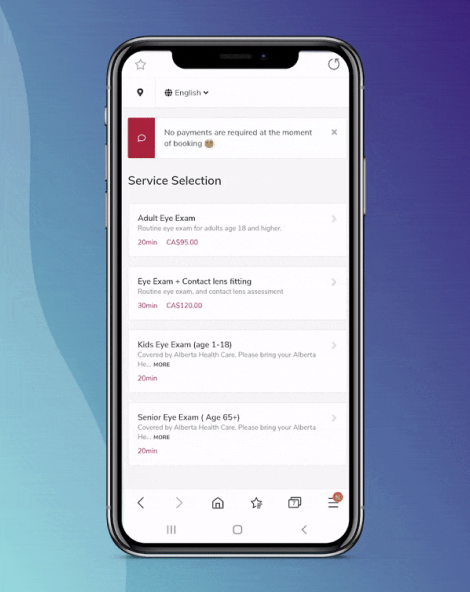
The best first step is a comprehensive children's eye exam. At Charm Optical, we'll assess your child's vision, check for myopia, and discuss whether myopia management is right for them. Kids' eye exams are covered by Alberta Health — no referral needed.
Book Your Child's Eye ExamLast updated: March 2026