
Biweekly vs Monthly Contact Lenses: Which Schedule Is Better for Your Eyes? (Edmonton Guide)
Biweekly vs Monthly Contact Lenses: Which Replacement Schedule Is Right for You?
Written by the Charm Optical Team • April 7, 2026
- What Does "Replacement Schedule" Actually Mean?
- Biweekly Contact Lenses: How They Work
- Monthly Contact Lenses: How They Work
- Side-by-Side Comparison: Biweekly vs Monthly
- Cost Comparison for Edmonton Contact Lens Wearers
- Comfort and Oxygen: What Your Eyes Actually Feel
- Hygiene and Eye Safety: Which Schedule Is Safer?
- Lifestyle Factors: Choosing Based on How You Live
- Top Brands We Carry in Edmonton
- Insurance Coverage for Contact Lenses in Edmonton
- Can You Switch From Biweekly to Monthly (or Vice Versa)?
- Contact Lens Shipping Across Canada
- Getting Fitted for Contacts in Edmonton
- Frequently Asked Questions
Choosing between biweekly contact lenses and monthly contact lenses is one of the most common decisions contact lens wearers face. Both schedules work well, but they suit different lifestyles, budgets, and eye health needs. If you've been wearing one type and wondering whether the other might be a better fit, you're asking the right question.
At Charm Optical in South Edmonton, we fit patients with both biweekly and monthly lenses every day. The truth is, neither schedule is universally "better." The right choice depends on your eyes, your habits, and how you actually wear your lenses in real life. This guide walks through everything you need to know to make that call with confidence.
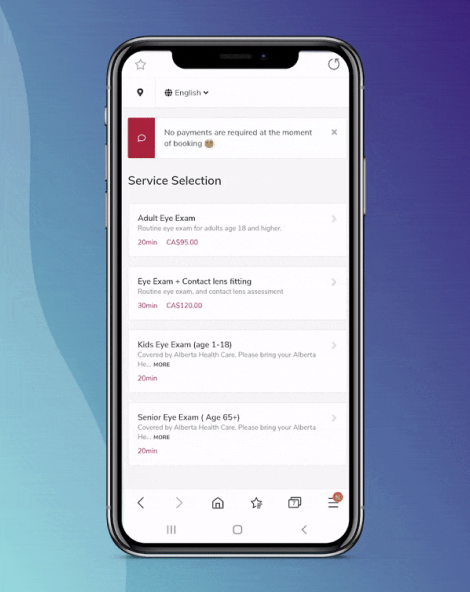
Need a contact lens exam or fitting? Book online or call us at (780) 490-0090. We're at 5035 Ellerslie Rd SW, Edmonton, AB T6X 1X2.
What Does "Replacement Schedule" Actually Mean?
Your contact lens replacement schedule tells you how long a single pair of lenses is designed to last before you throw them away and open a fresh pair. It's set by the lens manufacturer based on how the material holds up over time — how much protein and lipid buildup it can handle, how long it maintains safe oxygen transmission, and when the risk of eye infection starts climbing.
This is different from your wearing schedule, which is how many hours per day you wear them. A biweekly lens lasts 14 days whether you wear it eight hours a day or fourteen. The clock starts ticking the moment you open the blister pack, not when the lens is on your eye.
The American Academy of Ophthalmology is clear on this: stretching your lenses beyond their replacement schedule is one of the top risk factors for serious eye infections like microbial keratitis. The schedule isn't a suggestion. It's a safety boundary.
The Three Main Replacement Schedules
Contact lenses generally fall into three categories:
- Daily disposable — wear once, toss at the end of the day (covered in our daily vs monthly guide)
- Biweekly (2-week) — replace every 14 days, clean and store nightly
- Monthly — replace every 30 days, clean and store nightly
This article focuses on the biweekly and monthly options, since they share similar care routines but differ in important ways that affect comfort, cost, and eye health.
Biweekly Contact Lenses in Edmonton: How They Work
Biweekly contacts, also called 2-week contacts, are designed to be worn for up to 14 days before replacement. You remove them each night, clean and disinfect them in multipurpose solution, and put them back in the next morning. After two weeks, you open a new pair.
The most popular biweekly lens on the market — and the one we fit most often at Charm Optical — is Acuvue Oasys by Johnson & Johnson. It uses a silicone hydrogel material called Senofilcon A that allows high oxygen transmission, which keeps your corneas healthier during those two weeks of wear.
Advantages of Biweekly Lenses
- Fresher lenses more often. Replacing every two weeks means less protein and lipid deposit buildup compared to monthly lenses. Your lenses feel noticeably crisper in that second week than a monthly lens does in its third or fourth.
- Lower infection risk per cycle. Shorter replacement intervals mean less time for bacteria and deposits to accumulate on the lens surface.
- Good for sensitive eyes. If your eyes tend to get irritated or dry toward the end of a lens cycle, the two-week turnover can help.
- Widely available in astigmatism corrections. Acuvue Oasys for Astigmatism is one of the most commonly prescribed toric lenses in Canada.
Drawbacks of Biweekly Lenses
- More pairs per year. You'll go through 26 pairs per year instead of 12, which means more packaging and more frequent reorders.
- Harder to track the schedule. Fourteen days is an awkward interval. It doesn't line up neatly with calendar months, so many wearers lose track and either overwear or throw them out early.
- Slightly higher annual cost in most cases (though not always — see the cost comparison below).
Monthly Contact Lenses: How They Work
Monthly contact lenses are replaced every 30 days. Same nightly routine — remove, clean, disinfect, store. But you get twice the mileage out of each pair compared to biweeklies.
The most popular monthly lenses we carry at our Ellerslie location include Biofinity by CooperVision, Air Optix plus HydraGlyde by Alcon, and Total30 by Alcon. Each uses advanced silicone hydrogel materials with surface treatments designed to resist deposits and maintain moisture throughout the full 30-day cycle.
Advantages of Monthly Lenses
- Simpler schedule. First of the month, open a new pair. Easy to remember, easy to track.
- Fewer pairs per year. Just 12 pairs instead of 26 — less packaging, fewer reorders.
- Often lower annual cost. Per-lens cost is higher, but you need fewer of them. The math usually favours monthlies.
- Advanced deposit resistance. Modern monthly lenses use plasma surface treatments (Air Optix) or water-gradient technology (Total30) specifically engineered to stay comfortable through day 30.
Drawbacks of Monthly Lenses
- More deposit buildup. Thirty days gives proteins and lipids more time to accumulate, even with daily cleaning. Comfort often dips in the last week.
- Discipline required. You absolutely cannot stretch a monthly lens to six weeks or two months. The material degrades, oxygen permeability drops, and infection risk increases sharply.
- Not ideal for occasional wear. If you only wear contacts two or three days a week, a monthly lens sits in solution unused for most of its lifespan. That's wasted value (and not great for the lens material either).
Side-by-Side Comparison: Biweekly vs Monthly Contact Lenses
Here's how the two replacement schedules stack up across the factors that matter most:
| Factor | Biweekly (2-Week) | Monthly |
|---|---|---|
| Replacement cycle | Every 14 days | Every 30 days |
| Pairs per year | 26 | 12 |
| Nightly cleaning | Yes — multipurpose solution | Yes — multipurpose solution |
| Deposit buildup | Lower (shorter cycle) | Higher (longer cycle) |
| End-of-cycle comfort | Generally good through day 14 | May dip in week 4 |
| Schedule simplicity | Awkward (every 2 weeks) | Simple (1st of each month) |
| Best for | Sensitive eyes, heavy deposit formers | Daily wearers who want simplicity |
| Infection risk | Slightly lower per cycle | Slightly higher per cycle |
| Popular brand | Acuvue Oasys | Biofinity, Air Optix, Total30 |
How Much Do Biweekly and Monthly Contacts Cost in Edmonton?
Cost is usually the first question people ask, and the answer depends on your prescription, the brand, and whether you have insurance. Here's a general comparison based on standard prescriptions (no astigmatism or multifocal) at typical Edmonton retail pricing:
| Lens | Type | Approx. Annual Cost | Notes |
|---|---|---|---|
| Acuvue Oasys | Biweekly | $300–$380 | 4 boxes/year (6-pack boxes) |
| Biofinity | Monthly | $240–$300 | 4 boxes/year (6-pack boxes) |
| Air Optix plus HydraGlyde | Monthly | $260–$320 | 4 boxes/year (6-pack boxes) |
| Total30 | Monthly | $320–$400 | Premium water-gradient tech |
Prices are approximate and vary by prescription strength. Toric (astigmatism) and multifocal versions cost more. Ask us for an exact quote based on your Rx.
Don't forget to factor in solution costs. Both biweekly and monthly lenses need multipurpose solution ($12–$18/bottle), and most wearers go through about one bottle per month. That adds roughly $150–$200 per year regardless of which schedule you choose.
Also worth knowing: your annual contact lens exam and fitting is $135 CAD at Charm Optical — a standard eye exam is $99 CAD (as of July 2026) — and the $135 fee covers the fitting and all necessary measurements. That's the same price whether you end up in biweekly or monthly lenses.
Comfort and Oxygen Permeability: What Your Eyes Actually Feel
Comfort over the full wearing cycle is where biweekly and monthly contacts diverge most noticeably. Both start out feeling great on day one. The difference shows up toward the end.
With biweekly lenses like Acuvue Oasys, most wearers report consistent comfort through day 12 or 13. By day 14, some dryness or slight haze is normal, but you're replacing them anyway. The shorter cycle means deposits never reach the point where they significantly affect comfort.
With monthly lenses, the experience depends heavily on the brand. Biofinity's Aquaform technology maintains hydration well through about three weeks. Air Optix's SmartShield surface treatment resists deposit adhesion through the full month. Total30, Alcon's premium monthly lens, uses a water-gradient design where the outer surface of the lens is nearly 100% water — it's the closest a monthly lens gets to daily-disposable comfort.
Oxygen permeability matters too. Your cornea has no blood vessels; it gets oxygen directly from the air through your contact lens. The AAO recommends silicone hydrogel lenses for this reason — they transmit significantly more oxygen than older hydrogel materials. All of the biweekly and monthly lenses we carry at Charm Optical are silicone hydrogel.
Edmonton's Climate and Contact Lens Comfort
Alberta's dry winters are tough on contact lens wearers. Indoor heating drops humidity to 15–20%, and the cold wind outside doesn't help. If you find your lenses feeling dry and uncomfortable by mid-January, your replacement schedule might be part of the problem.
Switching from monthly to biweekly lenses during winter can help, because fresh lenses hold moisture better. Alternatively, a premium monthly lens like Total30 with its water-gradient surface handles dry environments better than standard monthlies. We help patients in Windermere, Summerside, and across the Ellerslie area find the right combination every winter.
Hygiene and Eye Safety: Which Replacement Schedule Is Safer?
From a pure eye-health perspective, shorter replacement intervals are generally safer. The American Academy of Ophthalmology notes that extended use of the same lens increases the risk of microbial keratitis, corneal ulcers, and other infections.
That said, the difference between a 14-day and 30-day cycle is relatively small — as long as you follow the care instructions. The bigger risk factors are:
- Overwearing. Using a 2-week lens for a month, or a monthly lens for six weeks. This is where infections happen.
- Sleeping in lenses. Unless your optometrist specifically approves extended wear, remove your lenses every night.
- Skipping the cleaning routine. Rinsing with water instead of solution, reusing old solution, or just popping lenses straight back in the case without rubbing and rinsing.
- Swimming or showering in lenses. Water introduces Acanthamoeba, a parasite that can cause serious corneal infection.
If you know you're the type of person who loses track of days and ends up stretching a two-week lens to three or four weeks, monthly lenses with a clear "first of the month" replacement date might actually be safer for you in practice. The best replacement schedule is the one you actually follow.
Lifestyle Factors: Choosing Based on How You Live in Edmonton
Your daily routine and hobbies should influence your lens choice as much as any clinical factor. Here's how different Edmonton lifestyles line up with each schedule:
Choose Biweekly If You...
- Have sensitive eyes or allergies (spring pollen season in Edmonton is no joke)
- Are a heavy deposit former — your optometrist can tell you this during your fitting
- Wear contacts 6–7 days a week and want the freshest lenses possible
- Play sports at places like Terwillegar Rec Centre or the Meadows Rec Centre where dust and sweat are factors
- Have a history of contact lens discomfort in the second half of the month
Choose Monthly If You...
- Want a simple, predictable replacement schedule
- Wear contacts daily and prefer fewer box reorders
- Are budget-conscious and want the lowest annual cost
- Are good about following care routines consistently
- Commute along the QEII or Whitemud and wear contacts from early morning to evening — monthly silicone hydrogels handle long wear days well
Consider Daily Disposables If You...
Only wear contacts a few days a week, have very sensitive eyes, or simply hate the cleaning routine. Dailies cost more per year but eliminate compliance issues entirely. Read our daily vs monthly contact lens comparison for the full breakdown.
Top Biweekly and Monthly Contact Lens Brands We Carry in Edmonton
At Charm Optical, we stock the most popular and clinically proven brands in both categories. Here's what we recommend and why:
Biweekly
Acuvue Oasys (Johnson & Johnson Vision) — The gold standard for 2-week lenses. Senofilcon A silicone hydrogel with HydraLuxe technology provides excellent oxygen and all-day moisture. Available in sphere, toric (astigmatism), and multifocal. If you're currently wearing biweekly lenses, there's a good chance they're Acuvue Oasys.
Monthly
Biofinity (CooperVision) — Aquaform technology locks in moisture without surface coatings that can wear off. Naturally wettable material. A reliable, comfortable monthly lens with a strong track record. Great value.
Air Optix plus HydraGlyde (Alcon) — SmartShield technology creates a protective layer that resists deposits and maintains a consistent, lubricated surface. Handles long wear days well. Available in toric and multifocal.
Total30 (Alcon) — Alcon's premium monthly lens with water-gradient technology. The outer surface is nearly 100% water, creating a cushion of moisture between the lens and your eyelid. The closest thing to daily-disposable comfort in a monthly lens. Ideal for dry-eye sufferers and anyone who demands top-tier comfort through day 30.
We carry all of these at our location near Ellerslie Road. If you're not sure which brand is right for you, a contact lens fitting at our store will sort it out quickly.
Insurance Coverage for Contact Lenses in Edmonton
Most employer-sponsored vision plans in Alberta cover a portion of contact lens costs, though the amount and frequency vary by plan. At Charm Optical, we offer direct billing to the major providers so you don't have to pay upfront and wait for reimbursement.
We direct bill to:
- Alberta Blue Cross
- Canada Life (formerly Great-West Life)
- Desjardins Insurance
- AISH (Assured Income for the Severely Handicapped)
- Alberta Works
Coverage typically ranges from $100 to $300 per person every 12 or 24 months, depending on your plan. Some plans cover either glasses or contacts in a given benefit year, not both. Bring your insurance card to your appointment and we'll check your exact coverage before you order anything.
Your contact lens exam and fitting ($135 CAD) is usually covered separately from your lens allowance, so getting fitted doesn't eat into your contact lens budget.
Can You Switch From Biweekly to Monthly Contact Lenses (or Vice Versa)?
Yes, and people do it more often than you might think. Switching between replacement schedules is straightforward, but it does require a new fitting appointment. Your optometrist needs to:
- Measure your current corneal curvature and diameter to confirm the new lens will fit properly
- Evaluate your tear film to determine which lens material will work best for your eyes
- Provide trial lenses so you can test the new schedule for a week before committing to a full supply
- Issue an updated contact lens prescription (the Rx for Acuvue Oasys is not interchangeable with Biofinity — brand and parameters are part of the prescription)
Common reasons patients at our South Edmonton location switch schedules:
- Monthly to biweekly: End-of-month dryness, deposit buildup, seasonal allergies making the last week uncomfortable
- Biweekly to monthly: Wanting a simpler schedule, reducing cost, moving to a premium lens like Total30
- Either to daily: Tired of cleaning routines, developing dry eye, or becoming a part-time wearer
Switching is painless. Book a contact lens exam online and let us know you're considering a change — we'll make sure you leave with the right lenses for your current situation.
Contact Lens Shipping Across Canada
Once you have a valid contact lens prescription from Charm Optical, we can ship your lenses anywhere in Canada. Whether you've moved from Edmonton to Toronto, have a student away at university in Vancouver, or are spending the winter somewhere warmer, your lenses come to you.
Reorders are easy — just call us at (780) 490-0090 or message us through the website. We keep your prescription on file and ship directly to your door.
Getting Fitted for Contact Lenses Near Me in Edmonton
If you're new to contacts or switching brands, a proper contact lens fitting makes all the difference. A fitting is more than just checking your prescription — it evaluates the health of your cornea, measures the shape and size of your eye, assesses your tear film quality, and determines which lens material and brand will give you the best comfort and vision.
At Charm Optical, a contact lens exam and fitting is $135 CAD (as of July 2026), and a standard eye exam is $99 CAD. The $135 fee includes the eye health assessment, refraction (your actual prescription), fitting measurements, and trial lenses to test before ordering a full supply.
We see patients from across Edmonton — Walker, Heritage Valley, Rutherford, Callaghan, and the broader south side. Our location at 5035 Ellerslie Rd SW is easy to get to from the QE2, Ellerslie Road, or 50th Street. Plenty of parking right in front.
Ready to find your best lens? Book your contact lens exam online at see.charmoptical.ca, or give us a call at (780) 490-0090. We're happy to answer any questions before your visit.
Frequently Asked Questions About Biweekly vs Monthly Contacts
Can I wear biweekly contacts for a month?
No. Biweekly lenses are designed to maintain safe oxygen transmission and resist deposits for 14 days. Wearing them beyond that increases your risk of corneal infection, irritation, and reduced oxygen supply to your cornea. Always follow the replacement schedule on the box.
Are monthly contacts bad for your eyes?
Not at all, as long as you replace them on time and clean them properly every night. Modern monthly lenses like Biofinity and Air Optix use silicone hydrogel materials with advanced surface treatments specifically designed for 30-day safety. The AAO confirms that following the prescribed replacement schedule is the most important safety factor.
Which is cheaper — biweekly or monthly contacts?
Monthly contacts usually have a lower annual cost. A year of Biofinity (monthly) runs about $240–$300, while Acuvue Oasys (biweekly) runs about $300–$380 for a standard prescription. However, solution costs are the same for both, and individual pricing varies. Ask us for an exact quote based on your Rx.
How do I know which replacement schedule is right for me?
Your optometrist considers your tear film quality, how many hours per day you wear contacts, your history of deposit buildup or dryness, and your lifestyle. A contact lens exam and fitting at Charm Optical ($135 CAD) will determine the best schedule and brand for your specific eyes.
Can I switch from biweekly to monthly contacts on my own?
No. Contact lens prescriptions are brand-specific. The base curve, diameter, and material differ between biweekly and monthly lenses. Switching requires a new fitting and updated prescription from your optometrist. You can book a fitting online at Charm Optical.
Do biweekly contacts dry out faster than monthly?
Not necessarily. Dryness depends more on the lens material and your tear film than the replacement schedule. However, biweekly lenses benefit from being fresher — less deposit buildup means they maintain moisture better relative to their lifespan. In Edmonton's dry winters, many patients find biweekly lenses more comfortable simply because they're replaced more often.
What happens if I sleep in my biweekly or monthly contacts?
Sleeping in contacts — even lenses approved for overnight wear — significantly increases your risk of eye infection. The CDC reports that sleeping in contacts makes you six to eight times more likely to develop a corneal infection. Unless your optometrist has specifically cleared you for extended wear, remove your lenses every night.
Not Sure Which Contact Lens Schedule Is Right for You?
Our team at Charm Optical can help you find the perfect fit. A contact lens exam and fitting is $135 CAD, and we'll walk you through your options based on your eyes, your lifestyle, and your budget.
Charm Optical • 5035 Ellerslie Rd SW, Edmonton, AB T6X 1X2 • (780) 490-0090