
Contacts Feel Wrong? 7 Causes and the Fix for Each
Contacts Feel Wrong? 7 Causes and the Fix for Each
Most contact lens discomfort comes down to seven causes: dryness, deposits, a base curve that does not match your eye, a rotating toric lens, solution sensitivity, overwear, and simply too many hours. Four you can fix yourself this week. Three need a fitting assessment. The timing of the symptom tells you which.
A symptom is not a diagnosis. "Dry" at hour ten and "dry" at minute five are two different problems with two different fixes. Start with when it happens.
When does it go wrong? Start there
A comfort complaint gets triaged by timing first, sensation second. Trouble in the first ten minutes points at the lens surface or the solution. Trouble at hour ten points at your tear film and your wear schedule. Trouble that never lets up points at fit.
This is common, not exotic. The TFOS International Workshop on Contact Lens Discomfort found up to half of lens wearers report discomfort with some frequency, and a review of dropout in Clinical Optometry found dropout across developed countries ranging from 12.0% to 27.4%, pooling at 21.7%, with discomfort the top cited reason among established wearers. Most of those people quit without ever being refitted.
The 16-hour comfort curve
Set the hour your lenses turn on you, then pick what it feels like. The curve is your day; the readout is the likely cause, the fix, and who applies it.
End-of-day dryness, the most common complaint there is
This is the classic pattern and it is fixable. Shorten the wear day, keep preservative-free drops at your desk, and finish the evening in glasses. If you genuinely need fourteen hours, a daily disposable or a wetter material is the honest answer.
Who fixes it: You first, then a fitting conversation about material.
A triage aid, not a diagnosis. The full seven causes are in the table below.
Take the lenses out first
Pain, light sensitivity, discharge, or a red eye that does not settle within a day of taking your lenses out is not a comfort problem. Remove the lenses, wear your glasses, and get seen the same day. The American Academy of Ophthalmology lists blurry vision, unusual redness, pain, tearing or discharge, light sensitivity and the feeling that something is in your eye as symptoms of a contact lens-related infection, and says to see your eye doctor as soon as possible.
The 7 causes, and what fixes each one
Read down the "when it hits" column until you find your day. That row is your starting point.
| Cause | What it feels like | When it hits | The fix | Who fixes it |
|---|---|---|---|---|
| 1. Tear film dryness | Gritty, sandy, eyes water to compensate | Hours 8 to 12 | Preservative-free drops, blink breaks, humidified air | You |
| 2. Deposits on the lens | Haze that a blink clears for a second, itch | Late in the replacement cycle | Rub and rinse, fresh solution, new case every 3 months | You |
| 3. Base curve or diameter mismatch | Edge awareness, lens slides off centre | All day, every day, from day one | Refit in a different base curve or diameter | Fitting assessment |
| 4. A toric lens rotating | Clear right after a blink, then smears | Worse looking down or lying on your side | Different stabilisation design or an axis adjustment | Fitting assessment |
| 5. Solution sensitivity | Stinging 10 to 20 minutes after insertion, redness | Every insertion, reusable lenses only | Move to a peroxide system or a different solution | You, guided by your optometrist |
| 6. Overwear | Redness, blur, a lens that dries onto the eye | After napping in lenses or stretching a monthly | Never sleep in them, replace strictly on schedule | You |
| 7. Simply too many hours | Fine at breakfast, unbearable by dinner | Hour 10 onward, worse on screen days | Shorter wear day, glasses in the evening, 20-20-20 | You |
Swipe the table sideways to see every column.
The seven, in plain language
1. Dryness
Your tear film is what the lens floats on. When it thins, the lens grips and every blink feels like sandpaper. Screens make it worse: the AAO notes we normally blink about 15 times a minute, and only about 5 to 7 times a minute while using computers and other digital screens. Preservative-free drops, deliberate full blinks and a break every 20 minutes buy most people several hours.
2. Deposits
Reusable lenses collect protein and oil from your own tears. By week three of a monthly, that film scatters light and traps debris. The CDC is blunt about the habits that prevent it: rub and rinse lenses with disinfecting solution, avoid mixing fresh and old solution in the case, store the case upside down with caps off after each use, and replace the case at least once every three months.
3. A base curve that does not match your eye
Base curve and diameter describe the shape of the lens against the shape of your cornea. They are measurements, not preferences. At the slit lamp an acceptable soft lens fit is graded on centration and movement — clinical work published in Investigative Ophthalmology & Visual Science judged fitting acceptable at a centration under 1 mm with post-blink movement within 0.2 to 0.4 mm. Much more and it decentres and you feel the edge; much less and it clamps down and goes red. No drop corrects this.
4. A toric lens that rotates
Toric lenses correct astigmatism, so they have to sit at a set angle. They are weighted to find that angle after each blink. If the design does not stabilise on your eye, vision is sharp for a moment and then smears, especially when you look down or lie on your side. Review of Optometry notes that a consistent rotation can be compensated for in the axis, while unstable rotation means a different lens.
5. Solution sensitivity
Preservatives in some multipurpose solutions build up in the lens and irritate the cornea, and sensitivity can appear after years of trouble-free use. The tell is timing: fine on insertion, burning ten to twenty minutes later. Hydrogen peroxide systems are preservative-free, but the FDA warns they must fully neutralise in their own case before the lens touches your eye.
6. Overwear
Sleeping in lenses, napping in them, or stretching a monthly to six weeks all starve the cornea of oxygen. The eye responds with redness, blur and swelling you cannot feel until it is bad. The American Academy of Ophthalmology puts a number on it: sleeping in lenses raises your risk of an eye infection six- to eightfold, and it makes no difference whether the lens is labelled for extended wear or you only nodded off once.
7. Too many hours
Sometimes nothing is wrong with the lens and the day is just long. Fourteen hours in a dry office in an Edmonton January is a lot to ask of any material. Wearing glasses for the last stretch of the evening is a legitimate fix, not a failure.
Four of the seven you can act on tonight. Three of them will follow you from brand to brand until someone puts a lens on your eye and watches how it sits.
Is this a habit fix, a tool fix, or a fit problem?
Here is the line we draw at the counter.
- Habit fix — rub and rinse every removal, fresh solution every time, replace lenses on the day they are due, stop napping in them, end the day in glasses. Free, and it resolves a surprising share of complaints.
- Tool fix — preservative-free rewetting drops, a different disinfecting system, a new case. We stock I-DROP® PUR at $35 and I-DROP® PUR GEL at $42; the manufacturer, I-MED Pharma, lists PUR as preservative-free and contact lens compatible.
- Fit problem — the lens moves, the vision smears after every blink, one eye is always worse, or it has felt wrong from the first day. Nothing in a bottle fixes geometry.
Give the habit and tool fixes two honest weeks. If your day has not improved by then, the answer is on the eye, not on the shelf, and that is a contact lens fitting conversation.
Do I need a different contact lens material?
Often, yes — but it is the second move, not the first. Silicone hydrogel materials pass more oxygen to the cornea than older hydrogels, which matters most for long days and reusable wear. Daily disposables sidestep deposits and solution sensitivity entirely, because you open a sterile lens every morning and there is no case in the story at all. Water content, surface treatment and modulus all change how a lens behaves at hour twelve.
Which one suits your eye is a fitting decision, not a shopping decision. These three sit at different points of that trade-off, and all three are in our contact lens range:


Daily disposable
A hydrogel daily, for eyes that do better without a case.
$50

We ship across Canada with free shipping over $100, and code CHARMCONTACTS takes $5 off a contact lens order. A valid prescription is required either way — more on that on our contact lenses in Edmonton page.
What does a contact lens fitting actually check?
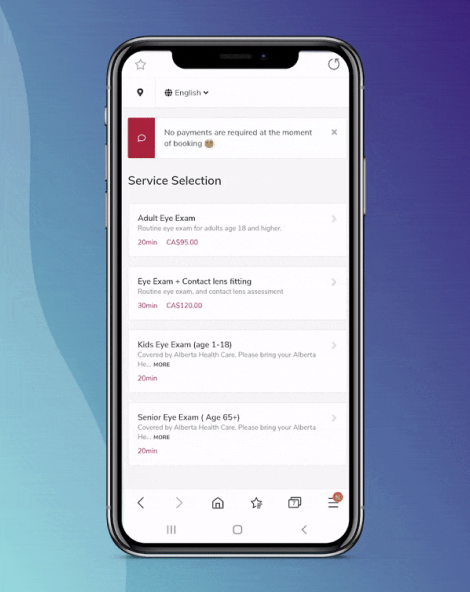
A comprehensive eye exam at Charm Optical is $99 for adults not covered by AHCIP. A contact lens exam and fitting is $135 and is not included in that $99. It is a separate appointment because it does separate work:
- Measures the curvature of your cornea, so the base curve is chosen rather than guessed
- Watches the lens move on a blink and after a push-up, to grade the fit as loose, ideal or tight
- Checks the lens surface and your cornea under the slit lamp for deposits, dryness and staining
- Reads the rotation marks on a toric lens and adjusts the axis if it settles off-target
- Teaches insertion, removal and care in the chair
That last point matters more than people expect. Plenty of "my contacts feel wrong" turns out to be a technique problem that ten minutes at the slit lamp resolves for good. Appointments are available at 5035 Ellerslie Rd SW in south Edmonton — see all of our eye care services.
FAQ
Why do my contacts feel dry?
Usually because your tear film thins faster than the lens can stay wet. Blink rate drops from about 15 a minute to 5 to 7 on screens, dry indoor air speeds up evaporation, and a reusable lens coated with protein holds less water. If dryness starts in the first ten minutes it is more likely the solution or the lens surface, not your tears.
Why are my contacts blurry after a few hours?
Mid-day blur that a blink clears for a second is almost always deposits on a reusable lens. Rub and rinse on every removal, never top off old solution, and replace the lens on the day it is due. If the blur returns with a brand-new lens, the cause is a toric lens rotating off axis or a dry lens surface, and both need to be looked at.
Why does my contact lens keep moving?
Because the base curve or diameter does not match your cornea. A well-fitting soft lens moves about 0.2 to 0.4 mm on a blink. A loose lens slides off centre, blurs when you look up and feels like an edge. No drop or solution corrects lens geometry, so a lens that has moved from day one needs a refit, not a different bottle.
Do I need a different contact lens material?
Possibly, but try the free fixes first. Silicone hydrogel passes more oxygen than older hydrogel, and daily disposables remove deposits and solution sensitivity from the picture completely. Which material suits your eye depends on your fit, your tear film and how many hours you wear them, so it is decided at a fitting rather than guessed from a box.
Can contact lens solution be the problem?
Yes, and it is missed often. Preservatives in some multipurpose solutions can irritate the cornea, and the sensitivity can appear after years of comfortable wear. The pattern is fine on insertion, then stinging and redness ten to twenty minutes later. A preservative-free hydrogen peroxide system is the usual answer, and it must fully neutralise in its own case first.
How long should I be able to wear my contacts each day?
Most healthy wearers manage 10 to 14 hours comfortably, but there is no rule that says you have to. If hours 12 to 14 are miserable, finishing the evening in glasses is a legitimate fix. What is not normal is discomfort in the first hour, or needing drops every 30 minutes just to keep them in.
Is it safe to nap in my contact lenses?
No. Closing your eyes over a lens cuts the oxygen reaching your cornea, and a short nap is enough to leave your eyes red, dry and blurry for the rest of the day. The American Academy of Ophthalmology says sleeping in lenses raises your risk of an eye infection six- to eightfold, whether or not the lens is labelled for extended wear.
How much is a contact lens fitting in Edmonton?
At Charm Optical a contact lens exam and fitting is $135, and it is not included in the $99 comprehensive eye exam. The fitting measures your corneal curvature, grades how the lens moves, checks your cornea under the slit lamp, and includes insertion, removal and care training in the chair. Appointments can be booked online.
Book an assessment
If two weeks of drops and clean habits have not fixed it, the answer is on your eye.
A contact lens exam and fitting is $135 at Charm Optical in south Edmonton. We measure the fit, check your cornea, sort out a rotating toric, and teach insertion, removal and care in the chair. Appointment only.
5035 Ellerslie Rd SW, Edmonton, AB • a comprehensive eye exam is $99 for adults not covered by AHCIP • the $135 contact lens exam and fitting is separate