

How to Put In and Remove Contact Lenses: Step-by-Step for Beginners (Edmonton Guide)
How to Put In and Remove Contact Lenses: Step-by-Step for Beginners (Edmonton Guide)
Putting in contact lenses for the first time can feel intimidating. Your eyes are blinking, your fingers are shaking, and the lens keeps folding in half. Sound familiar? You're not alone. Almost every contact lens wearer in Edmonton (and everywhere else) has been through this exact moment.
The good news: it gets easier fast. Most people go from "this is impossible" to "done in 10 seconds" within a week or two. This guide walks you through every step of how to put in contact lenses and how to remove contact lenses safely, with extra tips for Edmonton's dry winters and dusty summers.
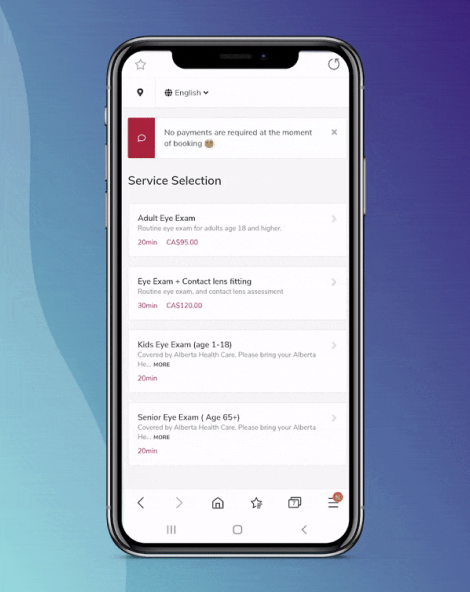
If you haven't had a contact lens fitting yet, that's your first step. At Charm Optical, a contact lens exam and fitting is $135 CAD and includes hands-on insertion/removal training so you leave confident (a standard eye exam is $99 CAD, as of July 2026). Book your exam online or call us at (780) 490-0090.
Before You Start: What You Need
Getting your supplies ready before you touch your lenses makes the whole process smoother. Here's what to have on hand:
- Clean hands — wash with a mild, non-moisturising soap and dry with a lint-free towel
- A well-lit mirror (a magnifying mirror helps if you're very nearsighted)
- Your contact lens case with fresh solution (for monthly or biweekly lenses)
- Multipurpose solution or saline (never tap water)
- Patience — your first few times will take longer, and that's completely normal
A quick note on hygiene: the American Academy of Ophthalmology stresses that proper hand washing is the single most important step in preventing contact lens infections. This matters even more in Edmonton, where we're constantly touching door handles and wearing gloves through the colder months.
How to Put In Contact Lenses in Edmonton: Step-by-Step
Whether you're getting ready for work in Windermere or heading to class at the University of Alberta, this process stays the same. Take your time — speed comes with practice.
The 6-step insertion walkthrough
Tap through each move and watch what your hands and eye are doing. No lens required — this is your dry run.
Step 1 of 6
Wash and dry your hands
Fragrance-free soap, no added moisturiser. Dry thoroughly with a lint-free cloth so the lens lands on your eye, not your fingertip.
A dry run for your hands. The full written steps are right below — this widget simply mirrors them.
Step 1: Wash and Dry Your Hands
Use fragrance-free soap without added moisturisers. Moisturising soaps leave a film on your fingers that transfers to the lens and blurs your vision. Dry your hands thoroughly with a lint-free cloth or paper towel. Wet fingers make lenses stick to your skin instead of your eye.
Step 2: Check the Lens Isn't Inside Out
Place the lens on your fingertip and look at it from the side. A correctly oriented lens looks like a smooth bowl with edges curving inward. An inside-out lens has edges that flare outward, like a saucer. Some brands print tiny numbers or letters on the lens edge — if you can read them normally, the lens is right-side out.
Spot an inside-out lens at a glance
Look at the lens edge-on. One of these is ready to go; the other needs a gentle flip.
Smooth bowl
Edges curve inward. Letters on the rim read the right way round.
Flared saucer
Edges flare outward. Gently flip the lens and rinse with solution.
Still unsure? Some brands laser-print a tiny mark on the edge — if it reads normally, you're good.
| What You See | Correct? | What to Do |
|---|---|---|
| Smooth bowl shape, edges curve inward | Yes | Ready to insert |
| Flat saucer shape, edges flare outward | No (inside out) | Gently flip lens, rinse with solution |
| Letters/numbers on edge read correctly | Yes | Ready to insert |
| Letters/numbers appear backwards | No (inside out) | Flip and rinse |
Step 3: Place the Lens on Your Index Finger
Use the index finger of your dominant hand. The lens should sit centred on your fingertip, not off to one side. Make sure your fingertip is dry so the lens doesn't slide around.
Step 4: Hold Your Eye Open
Use the middle finger of the same hand to pull down your lower eyelid. With your other hand, use a finger to lift your upper eyelid. This takes away the blinking reflex and gives you a clear target.
Step 5: Look Up and Place the Lens
Look slightly upward (focus on a spot on the ceiling) and gently place the lens on the lower white part of your eye. Don't aim straight for the coloured part — landing on the white area first is easier and less startling.
Step 6: Release and Blink
Slowly release your eyelids. Look down gently, then blink a few times. The lens will naturally centre itself over your pupil. If it feels comfortable and your vision is clear, you're done. If it feels gritty or looks blurry, remove the lens, rinse it, check for debris, and try again.
Repeat for the other eye. Always start with the same eye each time to avoid mixing up your left and right prescriptions.
How to Remove Contact Lenses: A Safe Method for Beginners
Removing lenses scares beginners more than inserting them. The key is staying calm and using the pinch method.
The 5-step removal walkthrough
A light touch is all you need. Walk through the pinch before you do it for real.
Step 1 of 5
Wash and dry your hands (again)
Yes, every single time — no shortcuts. Clean, dry hands keep bacteria away from your eye.
The written steps follow right below — the widget just mirrors them so you can picture each move.
Step 1: Wash and Dry Your Hands (Again)
Yes, every single time. No shortcuts.
Step 2: Look Up
Stand in front of a mirror. Look upward while keeping your head level.
Step 3: Slide the Lens Down
Using the index finger of your dominant hand, gently slide the lens down onto the lower white part of your eye. This makes it easier and more comfortable to pinch.
Step 4: Pinch Gently
Using your thumb and index finger, gently pinch the lens together. It should fold slightly and come away from your eye easily. Don't squeeze hard — a light touch is all you need.
Step 5: Clean and Store (or Dispose)
If you're wearing daily disposables, toss the lens. For reusable lenses, rub the lens gently with multipurpose solution for about 20 seconds, rinse, and store in a clean case with fresh solution. Never top off old solution — dump it out and refill completely.
The AAO recommends replacing your lens case every three months to prevent bacterial buildup.
Contact Lens Applicator Tools: Inserters & Removers
Prefer not to touch your eye? You don't have to. A contact lens applicator (also called an inserter) and a contact lens remover are small, inexpensive tools that do the touching for you. They're completely optional — most people manage perfectly well with clean fingers — but for some wearers they make the whole routine calmer and quicker.
Inserter cup vs. remover plunger
They look similar but work in opposite directions. Here's how to tell them apart.
A soft cup that places
A small soft-silicone cup or plunger holds the lens, concave-side up, so you can set it onto your eye without your fingertip ever touching the surface.
A hollow plunger that lifts
A soft hollow silicone plunger (or soft tweezers) gently grips the lens and lifts it away. The light suction means you never have to pinch with your nails.
Charm Optical doesn't stock these tools — this is here purely to help. They're widely sold at pharmacies and online.
Who Inserter and Remover Tools Actually Help
A tool is never required, but it can genuinely help if you fall into one of these groups:
- Long fingernails that get in the way of a clean pinch
- Hand tremors or arthritis that make fine fingertip control tricky
- A very strong blink reflex that snaps your eye shut the moment a finger gets close
- Feeling squeamish about touching your own eye
- Parents helping a child who isn't ready to do it alone yet
Are Contact Lens Applicators Safe?
Yes — when you keep them clean and use them gently. An applicator or remover follows the exact same hygiene rules as your fingers: clean hands first, rinse the tool with contact lens solution (never tap water), let it air-dry, don't share it with anyone, and replace it periodically. A dirty tool carries the same infection risk as dirty fingers, so the cleaning step is what keeps it safe. Used carelessly, any tool — or any finger — can scratch the eye, so go slowly and stop if anything feels sharp.
How to Clean an Applicator or Remover Tool
Cleaning takes seconds and is the whole game when it comes to safety:
- Rinse with multipurpose solution after each use — the same solution you use on your lenses, never tap water
- Air-dry in a clean spot, tip-up, so nothing settles on the surface that meets your lens
- Replace it regularly, just like you replace your lens case, before the silicone gets sticky or cloudy
- Keep it to yourself — a tool is personal, the same way a toothbrush is
One honest note: most people do perfectly well with just clean fingers. The six-step insertion and pinch-removal methods above work for the vast majority of wearers, and a tool is an optional aid rather than a requirement. If fingers are working for you, there's no reason to change.
Whichever method you settle on, the lenses themselves run out on a schedule — whenever it's time to restock, we ship your exact prescription across Canada with free shipping on orders over $99.
Common Mistakes First-Time Contact Lens Wearers Make
We see these at our Ellerslie location all the time during contact lens fittings. Every one of them is fixable:
| Mistake | Why It Happens | The Fix |
|---|---|---|
| Blinking before the lens lands | Natural reflex — your body is protecting your eye | Hold both lids firmly open; look away from your finger |
| Lens sticks to finger instead of eye | Fingertip is too wet | Dry your fingers more thoroughly before placing the lens |
| Lens folds on the eye | Not enough solution on the lens or inserting too fast | Add a drop of solution to the lens before inserting; slow down |
| Putting the lens in inside out | Forgot to check the bowl/saucer shape | Always check before inserting; an inside-out lens feels uncomfortable but won't damage your eye |
| Using tap water to rinse lenses | Seems convenient | Never use tap water — it contains Acanthamoeba and other organisms that cause serious eye infections |
| Sleeping in lenses not approved for overnight wear | Forgetting or thinking "just one night is fine" | Remove lenses before bed unless your optometrist has prescribed extended-wear lenses |
Swipe the table sideways to see all three columns
Contact Lens Tips for Edmonton's Climate
Edmonton throws some unique challenges at contact lens wearers. Here's how to handle them season by season.
Heated indoor air drops humidity fast. Keep preservative-free rewetting drops in your bag, blink deliberately at screens, and consider a fresh daily lens each morning for maximum moisture. A small humidifier at home or the office helps more than you'd expect. Full details are in the Winter notes just below.
Poplar and grass pollen sticks to lenses from May through July. Daily disposables shine here — you bin the pollen-coated lens each night. Pair your contacts with sunglasses for full UV protection on long summer days. See the Spring and Summer notes below.
Construction dust picks up in September and October across South Edmonton. Keep rewetting drops handy and clean your lenses thoroughly at the end of each day. The Fall notes below have the specifics.
Winter (November through March)
Edmonton's winters mean heated indoor air, which drops humidity levels dramatically. Many first-time contact lens wearers in neighbourhoods like Summerside and Rutherford notice their lenses drying out by mid-afternoon. Here's what helps:
- Rewetting drops: Keep a small bottle of preservative-free artificial tears in your bag. Use them whenever your lenses feel dry — especially after being in forced-air heating for a few hours.
- Blink more deliberately: Screen time reduces your blink rate by up to 60%. If you work at a computer, practice the 20-20-20 rule: every 20 minutes, look at something 20 feet away for 20 seconds, and blink fully.
- Consider daily lenses: A fresh lens every day means you start each morning with maximum moisture and comfort. This is especially helpful during Edmonton's driest winter months.
- Use a humidifier: At home or in your office, a small humidifier makes a noticeable difference in lens comfort.
For Edmonton's driest winter air, a moisture-focused daily lens like Alcon Dailies Total1 or Bausch + Lomb Biotrue ONEday means full hydration every morning with nothing to clean.
Spring and Summer
Allergy season hits Edmonton hard from May through July. Pollen from poplar trees and grass can stick to contact lenses and cause itchiness. Daily disposable lenses are ideal during allergy season because you throw away the pollen-coated lens at the end of each day rather than trying to clean it off.
UV protection is another consideration. While contact lenses with UV blocking exist, they don't cover your entire eye. The Canadian Association of Optometrists recommends wearing sunglasses over your contacts for full protection, especially during Edmonton's long summer days.
Fall
Dust picks up in September and October around construction zones across South Edmonton. If you're near the Ellerslie or Heritage Valley development areas, you might notice more debris irritation. Keep rewetting drops handy and clean your lenses thoroughly at the end of each day.
Daily vs. Monthly Lenses: Which Are Easier for First-Time Wearers?
This is one of the most common questions we get from people trying contacts for the first time. Both work well, but they suit different lifestyles.
What matters most to you starting out?
Daily disposables are your friend
Fresh pair each morning, toss them at night — no solution, no case, no buildup. It's the lowest-fuss, healthiest way to start. We stock dailies like Acuvue Oasys 1-Day, Alcon Precision 1, and Biotrue ONEday.
Browse daily lensesMonthlies win on cost — if you keep up the routine
Cheaper per month, but you'll rub, rinse, and store them in fresh solution every night. Great long-term if you're disciplined about hygiene. We carry monthlies like CooperVision Biofinity, Acuvue Vita, and Alcon Air Optix.
Browse monthly lensesDaily disposable lenses are often the best choice for beginners. You open a fresh pair each morning and toss them at night. No cleaning, no storing, no worrying about solution. They're also the healthiest option since there's no buildup of deposits or bacteria over time.
Monthly lenses cost less per month but require a cleaning routine. You'll need to rub, rinse, and store them in fresh solution every night. If you're disciplined about hygiene, monthlies are a great long-term option.
We carry a wide selection of both types in our contact lens collection, and we ship across Canada with free delivery on orders over $99. For a deeper comparison, read our guide on daily vs. monthly contact lenses.
Why a Contact Lens Fitting in Edmonton Matters
You can't just grab any contact lens off the shelf. Your eyes are unique — the curvature of your cornea, the size of your iris, your tear film quality, and your prescription all determine which lens brand and type will fit you properly.
A contact lens fitting near me (or near you, wherever you are in Edmonton) typically includes:
- Corneal measurements to determine the right lens diameter and base curve
- Tear film assessment to check if your eyes produce enough moisture for comfortable lens wear
- Trial lenses so you can test a pair before committing
- Hands-on training where our staff walks you through insertion and removal until you're comfortable
At Charm Optical, a contact lens exam and fitting is $135 CAD and includes one-on-one training. Whether you're coming from Windermere, Terwillegar, or the Meadows, our Ellerslie location at 5035 Ellerslie Rd SW, Edmonton, AB T6X 1X2 is easy to reach. You can book your appointment online or call (780) 490-0090.
In Edmonton?
Get fitted and trained in person — $135 CAD
New to contacts? Our $135 CAD contact lens exam and fitting includes hands-on insertion/removal training, and we direct bill Alberta Blue Cross, Canada Life, Desjardins, AISH and Alberta Works so you pay only your portion.
What About Insurance Coverage?
Many Edmonton residents have vision benefits that cover part or all of their eye exam and contact lenses. We direct bill the following providers so you don't have to deal with paperwork:
- Alberta Blue Cross
- Canada Life (formerly Great-West Life)
- Desjardins
- AISH
- Alberta Works
Not sure what your plan covers? Bring your benefits card to your appointment and we'll check for you on the spot.
Troubleshooting: What to Do When Things Go Wrong
Even experienced wearers run into issues occasionally. Here's a quick reference:
Tap your symptom for the fix
Pick what you're experiencing and we'll show the likely cause and the fastest fix.
Likely cause: Lens is inside out, dirty, or in the wrong eye
Fix: Remove, check orientation, rinse, reinsert
| Problem | Likely Cause | What to Do |
|---|---|---|
| Blurry vision after inserting | Lens is inside out, dirty, or in the wrong eye | Remove, check orientation, rinse, reinsert |
| Lens won't come out | Eye is dry, lens is stuck | Add rewetting drops, wait 30 seconds, then try sliding and pinching again |
| Lens moves off-centre | Poor fit or dry eyes | Close your eye and gently massage through the lid; see your optometrist if it happens often |
| Redness after wearing lenses | Overwear, poor fit, or solution sensitivity | Remove lenses, rest your eyes, and see your optometrist if redness persists past 24 hours |
| Stinging when inserting | Residue on fingers (soap, hand cream) or expired solution | Rewash hands with plain soap, use fresh solution, try again |
| Can't find the lens on your eye | It may have slid under your eyelid | Look in the opposite direction of where you think it went; it cannot go behind your eye (physically impossible) |
Swipe the table sideways to see all three columns
If you experience persistent pain, sudden vision changes, or discharge, remove your lenses immediately and contact your optometrist. These could be signs of a corneal infection that needs prompt treatment. The AAO's overview of keratitis explains why quick action matters.
Contact Lens Care Essentials
Good habits formed early will protect your eyes for years. The basics are simple:
- Never sleep in lenses unless your optometrist specifically prescribed extended-wear lenses
- Replace lenses on schedule — don't stretch dailies into two days or monthlies into six weeks
- Never use water — no tap water, no bottled water, no saliva. Only sterile solution touches your lenses
- Replace your case every three months and air-dry it face-down between uses
- Don't swim in contacts without watertight goggles — pools, hot tubs, and lakes all harbour bacteria
- Remove lenses before showering when possible — water splashing into your eyes with lenses in increases infection risk
Only sterile solution touches your lenses. No tap water, no bottled water, no saliva — ever.
Your First Week in Contacts: What to Expect
Your optometrist will likely recommend a break-in schedule. A typical first week looks like this:
Day 1–2
4–6 hours
You'll be hyper-aware of the lenses at first. Totally normal.
Day 3–4
6–8 hours
Most people stop noticing the lenses by now.
Day 5–7
10–12 hours
Work up to a full day. Your eyes need time to adjust.
- Day 1-2: Wear lenses for 4-6 hours. You'll be hyper-aware of them at first — that's normal.
- Day 3-4: Increase to 6-8 hours. Most people stop noticing the lenses by now.
- Day 5-7: Work up to a full day (10-12 hours). Your eyes need time to adjust to having something on them.
Don't push through discomfort. If your eyes feel tired, red, or dry, take the lenses out and give your eyes a break. Your glasses aren't going anywhere — they're your backup, not your enemy.
Frequently Asked Questions About Contact Lenses
Can a contact lens get lost behind my eye?
No. This is the most common fear beginners have, and it's physically impossible. A membrane called the conjunctiva connects to the back of your eyelids and prevents anything from passing behind your eye. If a lens slides off-centre, it's tucked under your upper or lower lid. Look in the opposite direction, blink, and it will usually move back into place.
How long does it take to learn how to put in contacts?
Most people can insert and remove lenses within 5-10 minutes during their first training session at our Ellerslie store. By the end of the first week, it typically takes under 30 seconds per eye. By month two, you won't even think about it.
Is it normal for contacts to hurt at first?
Mild awareness, yes. Pain, no. You should feel the lens on your eye initially, but it shouldn't sting, burn, or cause sharp discomfort. If it does, remove the lens, check for debris or damage, rinse it, and try again. Persistent pain means something is wrong — see your optometrist.
Are contact lens applicators safe?
Yes, when kept clean and used gently. An applicator or remover follows the same hygiene rules as your fingers: clean your hands first, rinse the tool with contact lens solution rather than tap water, let it air-dry, never share it, and replace it periodically. A dirty tool carries the same infection risk as dirty fingers, so the cleaning step is what keeps it safe. Most people do perfectly well with just clean fingers, so a tool is an optional aid rather than a requirement.
How do I clean a contact lens applicator or remover?
Rinse the tool with multipurpose contact lens solution after each use, never tap water. Let it air-dry in a clean spot, keep it to yourself rather than sharing it, and replace it regularly, just as you would your lens case. Keeping the tool clean is the single most important step for using it safely.
Can I wear makeup with contact lenses?
Absolutely. Put your lenses in before applying eye makeup, and remove them before taking makeup off. Use oil-free, water-based products around your eyes. Avoid lining the inner rim of your eyelid (the waterline) as this can coat the lens. Replace mascara every three months to prevent bacterial growth.
How much does a contact lens fitting cost in Edmonton?
At Charm Optical, a contact lens exam and fitting, including insertion/removal training, is $135 CAD (a standard eye exam is $99 CAD, as of July 2026). Many insurance plans cover part or all of this — we direct bill Alberta Blue Cross, Canada Life, Desjardins, AISH, and Alberta Works. Book your fitting online.
Can I order contact lenses online and have them shipped?
Yes. We ship contact lenses across Canada with free shipping on orders over $99. You'll need a valid prescription from a recent eye exam. If it's been more than a year since your last exam, we recommend booking a check-up first.
What if I can't get my contacts out?
Don't panic. Add a few rewetting drops to your eye, wait 30 seconds for the lens to rehydrate, then try the slide-and-pinch method again. If the lens truly won't budge, call us at (780) 490-0090 and we'll help you out. This happens to beginners sometimes and it's never an emergency.
Ready to try contact lenses for the first time? Come see us at Charm Optical, 5035 Ellerslie Rd SW, Edmonton. Our team will walk you through every step during your fitting, and you won't leave until you're comfortable doing it on your own. Book your $135 CAD contact lens exam and fitting online, or give us a call at (780) 490-0090. We're happy to help.
Got the hang of it?
You'll go through lenses regularly — we'll keep you stocked.
We ship your exact prescription anywhere in Canada with free shipping on orders over $99, so you never run out mid-week. A valid prescription is all you need. The brands first-timers reach for most:
A current prescription is required to ship lenses. Due for an exam? Book online.