
Multifocal Contact Lenses Explained: How They Work and Who They're For (Edmonton Guide)
Multifocal Contact Lenses Explained: How They Work and Who They're For (Edmonton Guide)
Sometime around your early to mid-40s, you notice it. The restaurant menu gets harder to read. Your phone drifts further away from your face. You're squinting at price tags in the grocery store. Welcome to presbyopia — and you're in very good company. Nearly every adult over 40 experiences it, and it has nothing to do with how healthy your eyes are.
If you already wear contact lenses (or want to start), you might assume your only option is reading glasses on top of contacts. Not true. Multifocal contact lenses correct both your distance and near vision in one lens, no readers required. They've improved dramatically over the past decade, and the latest designs work remarkably well for most people.
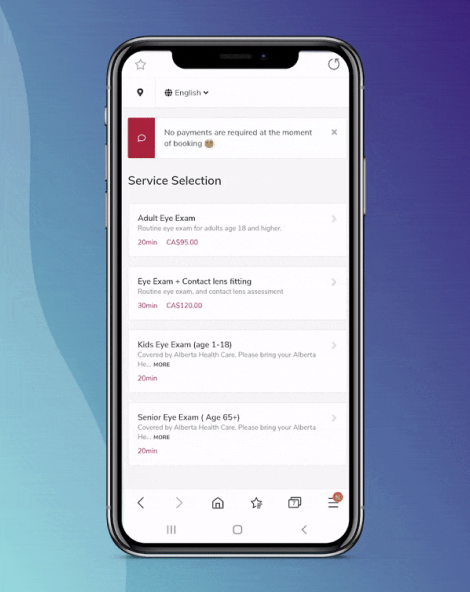
This guide covers how multifocal contacts actually work, who they're best for, what they cost, and what to expect from a fitting. If you're in Edmonton and curious whether these lenses could work for you, a contact lens exam and fitting is $135 CAD — a standard eye exam is $99 CAD (as of July 2026) — book online at see.charmoptical.ca or call (780) 490-0090.
What's in This Guide
- What Is Presbyopia (and Why Does It Hit After 40)?
- How Multifocal Contact Lenses Work
- Multifocal Lens Designs Compared
- Who Are Multifocal Contacts For?
- Top Multifocal Contact Lens Brands in Edmonton
- Multifocal Contacts vs. Progressive Glasses
- How Much Do Multifocal Contacts Cost in Edmonton?
- The Fitting Process: What to Expect
- Edmonton-Specific Tips for Multifocal Wearers
- Insurance Coverage for Multifocal Contacts in Alberta
- Ordering Contact Lenses Online From Charm Optical
- Frequently Asked Questions
What Is Presbyopia (and Why Does It Hit After 40)?
Presbyopia is the gradual loss of your eye's ability to focus on close objects. The lens inside your eye becomes less flexible with age, making it harder to shift focus between distances. According to the American Academy of Ophthalmology, presbyopia typically becomes noticeable between ages 40 and 45 and continues to progress until around age 65.
A few things to understand about presbyopia:
- It happens to everyone, regardless of whether you've had perfect vision your whole life
- It's not a disease — it's a normal, age-related change in the crystalline lens
- If you're already nearsighted, farsighted, or have astigmatism, presbyopia adds to those prescriptions
- It gets gradually stronger throughout your 40s and 50s, which means your "add power" (the near-vision boost) will increase over time
The classic signs: holding your phone at arm's length, needing brighter light to read, headaches after close-up work. If any of this sounds familiar, your optometrist can measure exactly how much add power you need during a comprehensive eye exam.
How Multifocal Contact Lenses Work
Multifocal contacts build multiple prescriptions into a single lens. Unlike bifocal glasses (which have a visible line) or progressive glasses (which blend zones from top to bottom), multifocal contacts use concentric rings or zones of different powers.
Your brain does the heavy lifting. Both distance and near-vision zones sit over your pupil simultaneously, and your visual system learns to select the right focus depending on where you're looking. This is called simultaneous vision, and it sounds strange, but most people adapt within one to two weeks.
A 2020 study published in Contact Lens and Anterior Eye found that modern multifocal soft contact lens designs provide satisfactory vision for the majority of presbyopic wearers, with adaptation typically complete within 5-10 days of full-time wear.
Centre-Near vs. Centre-Distance
Most multifocal contacts use a centre-near design, where the reading prescription sits in the middle of the lens and the distance prescription occupies the outer rings. Some designs flip this (centre-distance), placing distance correction at the centre. Your optometrist selects the design based on your prescription, pupil size, and visual demands.
How Your Add Power Affects the Lens
Your "add" power (+1.00, +1.50, +2.00, +2.50) indicates how much extra magnification you need for reading. Most multifocal contact lens brands categorise this into Low, Medium, and High add ranges. Early presbyopes (add +1.00 to +1.25) tend to have the easiest time adapting because the difference between zones is smaller.
Multifocal Lens Designs Compared
Not all multifocal contacts work the same way. Here's how the main design approaches differ:
| Design Type | How It Works | Best For | Trade-offs |
|---|---|---|---|
| Concentric Ring (Simultaneous) | Alternating rings of distance and near power; brain selects the right zone | Most presbyopes; widest range of prescriptions | May notice halos around lights at night during adaptation |
| Aspheric (Progressive) | Gradual power change from centre to edge, similar to progressive glasses | People who want a smooth, natural transition | May not work as well for high add powers |
| Segmented (Translating) | Distinct near and distance zones; lens shifts as you look down (like bifocal glasses) | Rigid gas permeable (RGP) lens wearers | Only available in RGP; not a soft lens option |
| Modified Monovision | One eye wears a distance-dominant multifocal, the other wears a near-dominant multifocal | People who struggle with standard multifocals | Some depth perception trade-off; requires trial fitting |
The concentric ring (simultaneous vision) design is by far the most common in soft multifocal contacts. All three brands we carry at Charm Optical use variations of this approach.
Who Are Multifocal Contacts For?
Multifocal contact lenses work well for a surprisingly broad range of people. The best candidates tend to be:
- Adults 40-65 with presbyopia who want clear vision at all distances without switching between glasses
- Current contact lens wearers who've started reaching for reading glasses — the transition to multifocals is very natural
- Active people who find progressive glasses impractical for sports, outdoor activities, or physical work
- Professionals who need to shift quickly between a computer screen, documents, and people across the room
- People who dislike the look of bifocal or progressive glasses — multifocal contacts are invisible
Who Might Not Be Ideal Candidates
Multifocals aren't perfect for everyone. People with very high add powers (+2.50 and above) sometimes find that neither distance nor near vision is quite as crisp as with single-vision correction. Those with severe dry eye may struggle with the lens surface quality needed for multifocals to work well. And some people with large pupils experience more noticeable halos at night.
That's exactly why a proper fitting matters — your optometrist can trial different designs and determine whether multifocals will give you the visual quality you need.
Top Multifocal Contact Lens Brands We Carry in Edmonton
We stock the three most proven multifocal contact lens brands at Charm Optical. Each one uses a slightly different approach to the near/distance balance:
| Brand | Material | Wear Schedule | Key Feature | Best For |
|---|---|---|---|---|
| Dailies Total1 Multifocal (Alcon) | Water gradient (delefilcon A) | Daily disposable | Water gradient surface (80%+ water at outer layer); SmarTears technology releases natural lipid | Dry eye sufferers; people who want zero lens care; Edmonton winters |
| Acuvue Oasys Max 1-Day Multifocal (Johnson & Johnson) | Silicone hydrogel (senofilcon A) | Daily disposable | Pupil-optimised design adjusts zone sizes by age and prescription; TearStable technology; blue-violet light filter | Heavy screen users; people who want sharp vision across all distances |
| Biofinity Multifocal (CooperVision) | Silicone hydrogel (comfilcon A) | Monthly (30-day) | Balanced Progressive Technology with distinct D and N lens designs; high oxygen transmissibility (Dk/t 160) | Budget-conscious wearers; those who prefer monthly replacement; high oxygen needs |
Dailies Total1 Multifocal
The gold standard for comfort. The water gradient design means the lens surface is over 80% water, which closely mimics your natural tear film. For Edmonton wearers dealing with our brutally dry winters (indoor humidity can drop below 20%), this lens tends to stay comfortable all day when others dry out by mid-afternoon. It's a daily disposable, so there's no cleaning, no case, no solution to buy.
Acuvue Oasys Max 1-Day Multifocal
Johnson & Johnson's latest multifocal uses a pupil-optimised design, meaning the zone sizes are customised based on your age and add power. This is significant because pupil size naturally decreases as you get older, and a one-size-fits-all zone layout doesn't account for that. The result is noticeably sharp vision at every distance. The built-in blue-violet light filter is a bonus for people spending hours on screens.
Biofinity Multifocal
If cost is a factor, the Biofinity Multifocal is the most economical option. It's a monthly lens, so you use one pair for 30 days (cleaning nightly with multipurpose solution). CooperVision's Balanced Progressive Technology uses two different lens profiles — a "D" design for the dominant eye (distance-centre) and an "N" design for the non-dominant eye (near-centre). Your optometrist fits each eye with the appropriate design for the best combined result.
Multifocal Contacts vs. Progressive Glasses: Which Is Better?
This isn't really an either/or question — many of our patients in Ellerslie and across South Edmonton use both, depending on the situation. But here's how they compare:
- Peripheral vision: Multifocal contacts win. Progressive glasses have narrow "corridors" of clear vision, especially for intermediate distances. Contacts give you full peripheral clarity.
- Adaptation: Progressive glasses can cause a "swimming" sensation and require head positioning. Multifocal contacts need brain adaptation but don't require head movement.
- Night driving: Progressive glasses generally win here. Multifocal contacts can cause halos around headlights, especially in the first week or two.
- Sports and activity: Contacts win decisively. No frames slipping, no fog, no rain droplets.
- Fine print / extended reading: Progressive glasses with a wide near zone often edge out contacts for long reading sessions.
- Cost: Progressive glasses have a higher one-time cost but last 1-2 years. Multifocal contacts are an ongoing monthly expense.
For a deeper comparison of progressive lenses and bifocals in glasses form, see our progressive vs. bifocals guide.
How Much Do Multifocal Contacts Cost in Edmonton?
Multifocal contacts typically cost $10 to $20 more per box than the equivalent single-vision lens from the same brand. Here's a realistic breakdown of what you can expect:
- Daily disposables (Dailies Total1 Multifocal, Acuvue Oasys Max Multifocal): roughly $55-$75 per box of 30 lenses. You need one box per eye per month, so monthly cost is approximately $110-$150.
- Monthly lenses (Biofinity Multifocal): roughly $45-$65 per box of 6 lenses. Each box lasts 6 months, so monthly cost works out to approximately $15-$22 per month plus solution costs.
Your initial contact lens exam and fitting is $135 CAD at Charm Optical — that includes the refraction, eye health check, contact lens measurements, and a trial pair so you can test the lenses before committing to a supply. A standard eye exam, without the contact lens fitting, is $99 CAD (as of July 2026).
Many of our patients in Windermere, Summerside, and the greater South Edmonton area use their insurance benefits to offset the cost significantly. More on that below.
The Fitting Process: What to Expect at Charm Optical in Edmonton
A multifocal contact lens fitting takes a bit more time and precision than a standard single-vision fitting. Here's what happens:
- Comprehensive eye exam — your optometrist measures your distance prescription, near add power, and checks your overall eye health
- Contact lens measurements — corneal curvature (keratometry), corneal diameter, tear film quality, and pupil size. These measurements help select the right lens brand and parameters.
- Dominant eye determination — your optometrist identifies which eye is dominant (most people have one). This matters because some multifocal systems use different lens designs for each eye.
- Trial lens application — you'll wear a pair of trial multifocal lenses in the office for 15-20 minutes. Your optometrist checks the fit under a slit lamp and asks you to read at various distances.
- Fine-tuning — if the first trial isn't perfect, your optometrist may try a different brand, adjust the add power, or switch the dominant/non-dominant configuration. This is normal and expected.
- Take-home trial — you leave with a trial pair (usually 5-7 days' worth) to test in your real life. Computer work, driving, reading menus, grocery shopping — all of it.
- Follow-up — you return for a quick check. If the lenses are working well, your optometrist finalises the prescription. If not, you try a different option.
This process is included in the $135 CAD contact lens exam and fitting fee. There's no extra charge for the trial lenses or the follow-up.
Edmonton-Specific Tips for Multifocal Contact Lens Wearers
Edmonton's climate creates some unique challenges for contact lens wearers. Here's what we tell our patients across Ellerslie, Windermere, Summerside, and Heritage Valley:
Winter Dry Eye (October to March)
Indoor heating drops humidity dramatically, and multifocal contacts are more sensitive to dryness than single-vision lenses because the optical zones rely on a smooth, well-hydrated surface. When the lens dries out, the zone transitions blur. Keep preservative-free rewetting drops handy (we recommend Refresh Optive or Systane Ultra). If you're a daily disposable wearer, the Dailies Total1 Multifocal handles dry conditions better than most because of its water gradient technology.
Summer UV and Wind
Edmonton summers bring long hours of intense UV exposure and afternoon wind. While multifocal contacts don't provide UV protection on their own (the Acuvue Oasys Max does filter some blue-violet light), you still need sunglasses. The advantage of contacts plus sunglasses over progressive sunglasses is significant — you get full-field vision correction with any pair of non-prescription sunnies.
Screen Time in Edmonton's Long Winters
We spend more time indoors and on screens during our long winters. The intermediate zone of multifocal contacts is designed for arm's-length distances (60-80 cm), which is perfect for laptop and desktop work. If you're doing 8+ hours of screen work daily, mention this during your fitting — your optometrist may adjust the design emphasis to favour intermediate vision.
Insurance Coverage for Multifocal Contacts in Alberta
Most major insurance plans in Alberta include contact lens coverage as part of your vision benefits. At Charm Optical, we offer direct billing with several providers, which means you pay only your portion at the time of purchase.
We direct bill with:
- Alberta Blue Cross
- Canada Life (formerly Great-West Life)
- Desjardins
- AISH (Assured Income for the Severely Handicapped)
- Alberta Works
Coverage amounts vary by plan and employer, but many plans cover $200-$400 per year toward contact lenses. Some plans cover the eye exam separately from the lens allowance. Bring your insurance card to your appointment and we'll check your coverage before you commit to anything.
Children under 19 in Alberta have their annual eye exams covered by Alberta Health Care. Adults over 65 also receive coverage for annual exams. For those in between, your employer plan typically covers the exam cost.
Ordering Contact Lenses Online From Charm Optical
Once your multifocal prescription is finalised, you can reorder lenses through our online contact lens store. We ship across Canada, and orders over $99 ship free.
A few things to know about ordering multifocal contacts:
- You'll need your full prescription, including base curve, diameter, power, and add power
- Make sure you order the correct eye designation (some brands use D and N lens types for dominant and non-dominant eyes)
- Multifocal lenses are a "near me" product — we keep popular brands in stock at our Ellerslie location for same-day pickup when available
- If you're reordering the exact same prescription, the process takes about 2 minutes online
Our store is at 5035 Ellerslie Rd SW, Edmonton, AB T6X 1X2. If you prefer to pick up in person, give us a call at (780) 490-0090 and we'll have your order ready.
Adapting to Multifocal Contacts: What the First Two Weeks Are Like
The most common reason people give up on multifocal contacts is quitting during the adaptation period. Here's what to realistically expect:
Days 1-3: Your distance vision may feel slightly soft, especially in dim lighting. Near vision is usually good right away. You might notice halos around streetlights at night. This is normal.
Days 4-7: Your brain starts to prioritise the correct zone automatically. Distance clarity improves noticeably. Most people can drive comfortably by this point.
Days 8-14: Vision feels natural at most distances. You stop thinking about the lenses. Any remaining halos typically resolve by the end of week two.
The key is wearing the lenses full-time during adaptation (at least 10-12 hours per day). Switching back and forth between multifocal contacts and glasses slows the adaptation because your brain has to readjust each time.
Research from the American Academy of Ophthalmology confirms that the majority of multifocal contact lens wearers report satisfaction with their vision after the initial adaptation period, with success rates above 80% when properly fitted.
Frequently Asked Questions About Multifocal Contacts
Can I wear multifocal contacts if I have astigmatism?
Yes, but options are more limited. Some multifocal lenses can correct mild astigmatism (up to -0.75D). For higher astigmatism, your optometrist may recommend a hybrid approach — a toric lens for astigmatism in one eye and a multifocal in the other, or a custom multifocal toric lens. During your fitting at Charm Optical, we'll determine the best combination for your prescription.
Are multifocal contacts the same as progressive contacts?
The terms are used interchangeably by most people and even some manufacturers. Technically, "progressive" refers to a gradual power change (like progressive glasses), while "multifocal" is the broader category that includes any lens with multiple focal points. In practice, when you search for "progressive contact lenses" or "multifocal contact lenses," you'll find the same products.
How long do multifocal contacts last compared to regular contacts?
The replacement schedule is identical to single-vision contacts of the same brand. Daily disposables are thrown away each night. Monthly lenses last 30 days with proper care. The multifocal design doesn't affect the lens lifespan — it only changes the optical zones built into the lens.
Will I still need reading glasses with multifocal contacts?
For most daily tasks — reading your phone, working on a computer, reading menus, checking price tags — multifocal contacts handle it well. For very fine print or extended reading sessions (like a 3-hour novel), some people prefer to add a pair of low-power readers over their contacts. This is more common with higher add powers (+2.00 and above).
Can I sleep in multifocal contacts?
Daily disposable multifocals (Dailies Total1, Acuvue Oasys Max) must be removed every night. Biofinity Multifocal is technically approved for up to 6 nights of extended wear, but most optometrists (including ours) recommend removing all contact lenses nightly. Sleeping in contacts significantly increases your risk of corneal infection, regardless of the lens type.
At what age should I start considering multifocal contacts?
Most people first notice presbyopia symptoms between 40 and 45. If you're already wearing contacts and finding yourself reaching for reading glasses, that's the signal to ask about multifocals at your next eye exam. There's no benefit to waiting — earlier adoption actually means easier adaptation because the add power starts low.
Do multifocal contacts work for driving?
Yes. Modern multifocal contacts provide adequate distance vision for safe driving, and the AAO notes that most wearers pass standard driving vision requirements. However, night driving during the first 1-2 weeks of adaptation may feel less comfortable due to halos. If you do a lot of night driving on Edmonton's Henday or Whitemud, mention this during your fitting so your optometrist can optimise for distance clarity.
Ready to Try Multifocal Contacts?
If you're over 40 and tired of juggling reading glasses, multifocal contacts might be the simplest upgrade you make this year. The technology has genuinely caught up to the promise, and the fitting process is straightforward.
At Charm Optical in South Edmonton, our $135 CAD contact lens exam and fitting includes everything you need: the full refraction, eye health assessment, contact lens fitting, trial lenses, and follow-up. We're at 5035 Ellerslie Rd SW, Edmonton, AB T6X 1X2.
Book your eye exam online at see.charmoptical.ca, or give us a call at (780) 490-0090 — we're happy to answer any questions before you come in.