

Myopia in Canadian Children: Why It's Rising and What Edmonton Parents Can Do in 2026
Myopia in Canadian Children: Why It's Rising and What Edmonton Parents Can Do in 2026
Written by the Charm Optical Team • April 7, 2026
- What Is Myopia (and Why Should Edmonton Parents Care)?
- How Fast Is Childhood Myopia Rising in Canada?
- Risk Factors: Screen Time, Outdoor Time, and Genetics
- What the Research Actually Says About Screen Time and Myopia
- Outdoor Time: The Most Underrated Protection
- Myopia Control Options for Edmonton Kids
- Myopia Control Lenses: How They Work
- Atropine Drops and Ortho-K: Other Approaches
- When Should Your Child's Eyes Be Examined in Edmonton?
- Cost and Insurance Coverage for Kids' Eye Exams in Alberta
- Practical Steps for Edmonton Parents Right Now
- Children's Eye Exams Near Me in Edmonton
- Frequently Asked Questions About Childhood Myopia
If your child squints at the whiteboard, holds a tablet six inches from their face, or complains that things far away look blurry, you're probably already wondering about their eyesight. You're not imagining things. Childhood myopia (nearsightedness) is increasing across Canada, and the numbers in Alberta are following the same upward trend researchers have documented worldwide.
This isn't a passing concern. High myopia in adulthood raises the risk of serious eye conditions later in life, including retinal detachment, glaucoma, and myopic maculopathy. The earlier myopia starts in a child, the more it tends to progress. That makes early detection and myopia control genuinely important, not just for clearer vision now, but for long-term eye health.
We put this guide together based on current research from peer-reviewed journals, Canadian health guidelines, and what we see every week at our South Edmonton optical store. If you're an Edmonton parent trying to make sense of myopia control lenses, atropine drops, screen time limits, and when your child actually needs an eye exam, this is for you.
What Is Myopia (and Why Should Edmonton Parents Care)?
Myopia is a refractive error where the eyeball grows slightly too long from front to back, or the cornea curves too steeply. Light entering the eye focuses in front of the retina instead of directly on it. The result: close objects look clear, but anything at a distance appears blurry.
A child with myopia can read a book just fine but can't make out the teacher's writing from the back of the classroom. Glasses or contact lenses correct the blur by redirecting light onto the retina, but they don't stop the eye from continuing to grow longer. That's the key distinction. Correcting myopia and controlling myopia are two different things.
Why does this matter beyond needing thicker glasses? The World Health Organization classifies myopia as a significant public health concern. High myopia (typically -6.00 dioptres or beyond) dramatically increases the lifetime risk of:
- Retinal detachment (the retina pulls away from the back of the eye)
- Myopic macular degeneration (central vision loss)
- Glaucoma (optic nerve damage from elevated pressure)
- Early cataracts
Every additional dioptre of myopia a child develops increases these risks. Slowing that progression by even 1 dioptre can reduce the lifetime risk of myopic maculopathy by roughly 40%, according to research published in Ophthalmology (Bullimore et al., 2019). That's why optometrists across Edmonton are paying close attention to myopia control, and why parents should too.
How Fast Is Childhood Myopia Rising in Canada?
The global numbers are striking. The WHO estimates that roughly 30% of the world's population is currently myopic, and projections suggest that figure will reach 50% by 2050. Canada is not an exception.
Canadian data from the Canadian Association of Optometrists and various provincial studies show a clear upward trajectory. While exact national prevalence figures for children are still being refined through ongoing research, the pattern mirrors what large-scale studies have documented in East Asia, Europe, and the United States.
Estimated Myopia Prevalence by Age Group (Canadian Children)
| Age Group | Estimated Myopia Prevalence | Trend (2010–2025) |
|---|---|---|
| 6–7 years | 5–10% | Rising (up from ~3–5%) |
| 8–10 years | 15–20% | Rising steadily |
| 11–13 years | 25–35% | Significant increase |
| 14–17 years | 30–40% | Continuing to climb |
| University age (18–25) | 40–50% | Highest among young adults |
Sources: WHO global myopia projections; Holden et al., Ophthalmology, 2016; Canadian Association of Optometrists position statements. Canadian-specific figures are estimates informed by global and regional research.
The post-pandemic acceleration is especially concerning. Studies across multiple countries showed myopia onset and progression rates increased during 2020–2022, likely due to reduced outdoor time and increased near-work during lockdowns. Edmonton families experienced this firsthand. Schools moved online, playgrounds closed, and screen time skyrocketed for kids across Summerside, Windermere, Heritage Valley, and every neighbourhood in the city.
Risk Factors for Childhood Myopia: What Actually Matters
Myopia develops from a combination of genetics and environment. Understanding which factors carry the most weight helps parents focus on what they can actually influence.
Key Risk Factors for Myopia in Children
| Risk Factor | Impact Level | Can Parents Modify It? | What the Research Shows |
|---|---|---|---|
| Both parents myopic | High | No | Child is 5–6x more likely to develop myopia |
| One parent myopic | Moderate | No | Child is 2–3x more likely to develop myopia |
| Low outdoor time | High | Yes | Less than 60 min/day outdoors increases risk significantly |
| Excessive near work | Moderate–High | Yes | Prolonged reading/screens at close distances (<30 cm) increases risk |
| Screen time (>3 hrs/day) | Moderate | Yes | Correlated with myopia, though distance and duration matter more than screen itself |
| Early myopia onset (< age 8) | High | No (but early detection helps) | Earlier onset = more years of progression = higher final prescription |
| East Asian ethnicity | Moderate–High | No | Higher genetic predisposition, though environment plays a major role |
| Urban environment | Moderate | Partially | Urban children have higher myopia rates than rural, likely linked to less outdoor time |
The takeaway: genetics loads the gun, but environment pulls the trigger. Even if both parents are myopic, outdoor time and near-work habits can meaningfully affect whether a child develops myopia and how fast it progresses.
What the Research Actually Says About Screen Time and Kids' Nearsightedness
Screen time gets blamed for nearly everything involving children's health, and myopia is no exception. But the research is more nuanced than "screens cause nearsightedness."
A large meta-analysis published in The Lancet Digital Health (2021) found that each additional hour per day of screen time was associated with a 3% higher odds of myopia in children. That's statistically significant across large populations, but modest at the individual level.
What seems to matter more than the screen itself is the viewing distance and the duration of unbroken near focus. Reading a book held eight inches from the face carries similar risk to staring at a phone at the same distance. The problem isn't specifically that it's a screen. The problem is sustained near work without breaks.
What the Evidence Supports
- Continuous near work without breaks increases myopia risk. The 20-20-20 rule (every 20 minutes, look at something 20 feet away for 20 seconds) has solid evidence behind it.
- Holding devices close matters. Children who hold screens closer than 30 cm (about 12 inches) show higher rates of myopia progression than those who maintain a reasonable distance.
- Total daily near-work hours matter. Kids who do more than 3 hours of near work per day (homework, reading, screens combined) have elevated risk.
- Outdoor time counteracts near-work risk. This is one of the strongest and most consistent findings in myopia research. We'll cover it in detail below.
What the Evidence Does Not Support
- That blue light from screens causes myopia (it doesn't, based on current evidence)
- That any specific type of screen (tablet vs. TV vs. phone) is uniquely harmful
- That complete elimination of screens is necessary or realistic
For Edmonton parents, the practical message is this: you don't need to ban screens entirely. You need to manage how long your child focuses at close range without a break, and you need to make sure they get adequate time outdoors. Both are achievable without turning your household upside down.
Outdoor Time in Edmonton: The Most Underrated Protection Against Myopia
If there's one finding in myopia research that consistently surprises parents, it's this: time spent outdoors is one of the strongest protective factors against developing myopia. Not outdoor sports specifically. Not exercise. Just being outside in natural light.
A landmark study from Sydney, Australia (the Sydney Myopia Study, Rose et al., 2008) found that children who spent more time outdoors had significantly lower rates of myopia, regardless of how much near work they did. Multiple large trials in China and Taiwan confirmed this, showing that adding 40–80 minutes of daily outdoor time reduced new myopia cases by 23–50%.
The mechanism isn't fully understood, but the leading theory involves light intensity. Natural daylight, even on an overcast day, is many times brighter than indoor lighting. This brightness appears to stimulate dopamine release in the retina, which helps regulate normal eye growth and may prevent the excessive axial elongation that causes myopia.
The Edmonton Challenge
Here's where things get real for local families. Edmonton averages about 2,300 hours of sunshine per year, which is actually above the Canadian average. But our winters are long, dark, and cold. Getting kids outside for extended periods in January when it's -25°C and dark by 4:30 PM is genuinely difficult.
Practical strategies that work for Edmonton families:
- Maximize summer and shoulder seasons. May through September is your window for easy outdoor time. Parks in Ellerslie, Heritage Valley, and Walker have playgrounds that keep kids outside naturally.
- Winter doesn't mean zero outdoor time. Even 30–40 minutes of outdoor play during lunch recess counts. Snow brightness actually provides high light levels. Skating at Meadows Community Recreation Centre, tobogganing, or just walking the dog after school all count.
- Weekends matter. A two-hour trip to a river valley trail or Goldbar Park on Saturday adds meaningfully to weekly outdoor totals.
- Daylight, not sunlight specifically. Your child doesn't need to be in direct sun. Cloudy days still provide far more lux (light intensity) than the brightest indoor environment.
- Aim for 90–120 minutes daily. The Canadian Association of Optometrists recommends at least 90 minutes of outdoor time per day for children. This can be cumulative throughout the day.
It's also worth noting that Edmonton's long summer daylight hours (sunrise before 5:30 AM, sunset after 10 PM in June) offer an advantage. Families who take advantage of those extended evenings at Terwillegar Park, along the trails in the river valley, or just playing in the backyard can easily hit the recommended outdoor targets.
Myopia Control Options for Edmonton Kids: What Actually Works
Once a child is diagnosed with myopia, the question shifts from prevention to management. Standard single-vision glasses correct the blur, but they do nothing to slow the eye's growth. Myopia control interventions aim to reduce the rate of progression so the child's final prescription is lower than it would have been otherwise.
No current treatment stops myopia completely. But several approaches have strong clinical evidence showing they can slow progression by 30–60%, which translates to meaningful reductions in lifetime risk.
Here's an honest overview of what's available in Canada in 2026:
Overview of Myopia Control Approaches
- Myopia control spectacle lenses (e.g., Essilor Stellest, Hoya MiYOSMART, ZEISS MyoCare) — specially designed glasses lenses
- Low-dose atropine eye drops (0.01%–0.05%) — pharmaceutical intervention
- Orthokeratology (Ortho-K) — overnight contact lenses that reshape the cornea
- Multifocal soft contact lenses — daily or monthly wear contacts with myopia control optics
- Increased outdoor time + near-work management — behavioural, no cost
Your child's optometrist will recommend an approach based on age, rate of progression, lifestyle, and how well the child (and parents) can manage each option. Some children use a combination. For example, myopia control lenses during the day plus low-dose atropine drops at night.
Myopia Control Lenses: How They Work and What's Available in Edmonton
Myopia control lenses are the most accessible option for younger children because they look and feel like regular glasses. No drops, no contacts, no overnight wear. For many Edmonton families, this is the easiest entry point into myopia management.
These aren't ordinary single-vision lenses. They use specific optical designs to correct central vision normally while creating a "defocus" signal in the peripheral retina. Research suggests that this peripheral defocus helps slow axial elongation of the eye, which is the physical mechanism behind myopia progression.
Major Myopia Control Lens Designs (Available in Canada, 2026)
- Essilor Stellest: Uses a constellation of 1,021 invisible micro-lenses arranged in 11 rings on the lens surface. Published 3-year clinical data showed 67% slower myopia progression compared to standard single-vision lenses. This is one of the most extensively studied designs.
- Hoya MiYOSMART (D.I.M.S. Technology): Features hundreds of tiny segments that create myopic defocus across the lens. Clinical studies showed approximately 60% slower myopia progression. Widely used across Asia and Europe, available in Canada.
- ZEISS MyoCare: Uses a cylindrical annular design (C.A.R.E. Technology) to create consistent peripheral defocus. Newer to market, with growing clinical evidence.
All three designs correct your child's vision normally through the central zone while the defocus elements work in the peripheral retina. Children typically adapt to these lenses within a few days, and most report no difference in visual comfort compared to standard glasses.
What Parents Should Know About Myopia Control Lenses
- They look like regular glasses. Other kids won't notice anything different.
- They need to be worn consistently (all waking hours) to be effective.
- Results are measured over years, not weeks. Expect annual check-ups to track axial length and prescription changes.
- They cost more than standard single-vision lenses, but many insurance plans cover children's glasses, which offsets some of the difference.
- Your child still needs regular comprehensive eye exams to monitor progression.
At Charm Optical, we carry myopia control lens options and can help you understand which design might work best for your child. We'll walk through the clinical evidence, cost, and what to expect so you can make a genuinely informed decision. Come talk to us at our Ellerslie location or give us a call at (780) 490-0090.
Atropine Drops and Ortho-K: Other Myopia Control Approaches
Low-Dose Atropine Eye Drops
Atropine is a well-known medication in eye care, traditionally used to dilate pupils during exams. Researchers discovered that very low concentrations (0.01% to 0.05%) can slow myopia progression in children without causing the side effects of higher doses.
The ATOM studies (Atropine for the Treatment of Myopia) out of Singapore were the landmark trials. The ATOM2 study found that 0.01% atropine slowed myopia progression by approximately 50% over two years, with minimal side effects and low rebound effect when discontinued.
Key points for Edmonton parents:
- Low-dose atropine is used off-label in Canada. Your child's optometrist or ophthalmologist prescribes it, and it's typically compounded by a pharmacy.
- It's administered as one drop in each eye at bedtime. Most children tolerate it easily.
- Side effects at low doses are minimal. Some mild light sensitivity or slight pupil dilation, but far less than the full-strength version.
- Treatment typically continues for two or more years. Stopping too soon may lead to rebound progression.
- Cost varies, but compounded atropine is generally affordable (roughly $30–$60 per month).
Orthokeratology (Ortho-K)
Ortho-K uses specially designed rigid gas-permeable contact lenses worn only during sleep. Overnight, the lenses gently reshape the front surface of the cornea. When the child removes them in the morning, they can see clearly all day without glasses or daytime contacts.
Beyond the convenience factor, Ortho-K creates a peripheral defocus pattern on the retina that appears to slow axial elongation. Studies show roughly 40–50% reduction in myopia progression compared to standard correction.
Considerations:
- Requires nightly lens wear. Children need to be mature enough to handle contact lens hygiene with parental supervision.
- Not suitable for all prescriptions. Works best for mild to moderate myopia.
- Higher upfront cost than spectacle lenses, with ongoing lens replacement costs.
- Requires more frequent follow-up visits than glasses-based myopia control.
- Good option for active kids who play sports and don't want to wear glasses during activities.
Many optometrists in Edmonton offer Ortho-K fitting. Your child's eye care provider can assess whether their prescription and corneal shape make them a good candidate.
When Should Your Child's Eyes Be Examined in Edmonton?
The Canadian Association of Optometrists recommends the following eye exam schedule for children:
- First exam: Between 6 and 9 months of age
- Second exam: Between ages 2 and 5
- School-age children: Annually from age 6 through 19
Annual exams matter even more for children with myopia or a family history of nearsightedness. Myopia typically begins between ages 6 and 12, and progresses most rapidly between ages 8 and 15. Catching it early creates a wider window for myopia control interventions to make a meaningful difference.
Signs Your Child Might Be Developing Myopia
- Squinting when looking at distant objects (TV, whiteboard, road signs)
- Sitting unusually close to the television or holding books very close
- Complaining of headaches, especially after school
- Rubbing their eyes frequently
- Difficulty seeing the board at school (teachers sometimes notice first)
- Tilting their head or covering one eye to see better
- Declining interest in outdoor or distance activities
Don't wait for complaints. Many children, especially younger ones, don't realize their vision isn't normal because they've never experienced anything different. A child who's always seen the world blurry at a distance simply assumes that's how things look.
Cost and Insurance Coverage for Kids' Eye Exams in Alberta
Good news for Alberta families: children's eye exams are covered under the Alberta Health Care Insurance Plan (AHCIP). Kids under 19 receive one comprehensive eye exam per year at no cost when performed by an optometrist who bills AHCIP directly. This removes one of the biggest barriers to getting your child's eyes checked.
Beyond the exam itself, you'll want to know what your insurance covers for glasses and myopia control lenses. Coverage varies significantly between plans.
At Charm Optical, we offer direct billing to the following major insurance providers:
- Alberta Blue Cross
- Canada Life (formerly Great-West Life)
- Desjardins
- AISH (Assured Income for the Severely Handicapped)
- Alberta Works
If your child needs myopia control lenses, check whether your plan covers "specialty lenses" or "therapeutic lenses," as myopia control designs sometimes fall under a different category than standard single-vision lenses. We can help you navigate this. Bring your insurance card when you visit and we'll verify your coverage before you choose frames.
Comprehensive eye exams at Charm Optical start at $99 for adults. For children under 19 covered by AHCIP, the exam is free. There's genuinely no financial reason to skip your child's annual eye exam in Alberta.
Practical Steps for Edmonton Parents Right Now
You don't need to wait for a diagnosis to start protecting your child's eyes. Here are evidence-based steps you can take today:
1. Prioritize Outdoor Time
Aim for 90–120 minutes of outdoor time daily. Break it up: morning recess, lunch break outside, after-school play, weekend outings. Edmonton's river valley trails, community league playgrounds in Rutherford, and parks across the south side make this easier than you might think.
2. Enforce the 20-20-20 Rule
Every 20 minutes of near work (homework, reading, screens), your child should look at something 20 feet away for at least 20 seconds. Set a timer if needed. This gives the focusing muscles a rest and may reduce the stimulus for eye elongation.
3. Maintain Proper Working Distance
Books, tablets, and phones should be held at least 30 cm (12 inches) from the eyes. A simple test: if your child can rest their elbow on the desk and touch their chin, the screen should be no closer than their elbow. Closer than that consistently increases myopia risk.
4. Limit Unbroken Screen Sessions
The total hours matter less than continuous duration. A child who uses a tablet for two hours with 10-minute outdoor breaks every 30 minutes is at lower risk than one who stares at a screen for two hours straight. Build breaks into the routine, not just the rules.
5. Schedule Annual Eye Exams
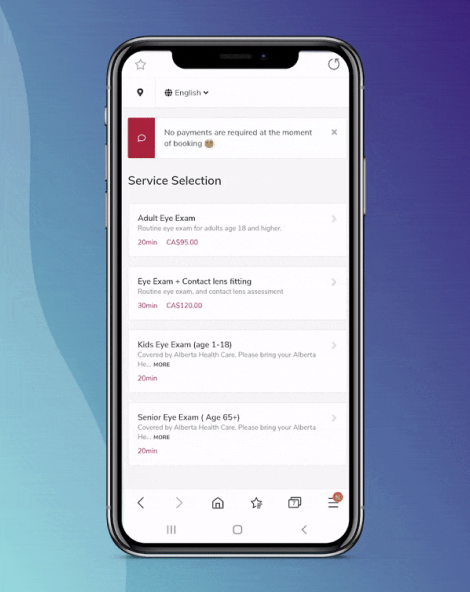
Covered under AHCIP for children under 19. There's no excuse not to do this annually. Early detection of myopia creates the widest window for intervention. Book your child's eye exam at see.charmoptical.ca.
6. Know Your Family History
If one or both parents are myopic, your child is at significantly higher risk. Tell your optometrist about the family history so they can monitor more closely and discuss myopia control options earlier rather than later.
7. Create a Device-Free Zone Before Bed
Screens within an hour of bedtime affect sleep quality, and poor sleep has been loosely associated with faster myopia progression in some studies. Beyond myopia, reducing evening screen time just helps kids sleep better, which benefits everything.
Children's Eye Exams Near Me in South Edmonton
If you're searching for a children's eye exam near me in Edmonton, Charm Optical is located at 5035 Ellerslie Rd SW, Edmonton, AB T6X 1X2. We're in the Ellerslie area of South Edmonton, easily accessible from Heritage Valley, Summerside, Walker, Rutherford, Windermere, Callaghan, and the Anthony Henday corridor.
We see families from across the south side and beyond. Whether your child needs their first eye exam, an updated prescription, or you want to discuss myopia control lenses for a child whose nearsightedness is progressing, we're here to help.
What to bring to your child's appointment:
- Alberta Health Care card (for AHCIP-covered children's exams)
- Current glasses, if your child already wears them
- Your insurance card for direct billing of glasses or lenses
- A list of any concerns: squinting, headaches, sitting close to the TV, school performance changes
You can book online at see.charmoptical.ca or call us at (780) 490-0090. We're happy to answer questions about children's glasses frames, myopia control options, or anything else before you come in.
Frequently Asked Questions About Childhood Myopia
Do kids' eye exams cost money in Alberta?
No. Children under 19 are covered for one comprehensive eye exam per year under the Alberta Health Care Insurance Plan (AHCIP). The optometrist bills the province directly, so there's no out-of-pocket cost for the exam itself. Glasses and lenses are separate, but many employer insurance plans cover part or all of children's eyewear.
At what age should my child first see an optometrist?
The Canadian Association of Optometrists recommends a first eye exam between 6 and 9 months of age. The second exam should happen between ages 2 and 5. From age 6 onward, annual exams are recommended. Children can't always tell you something is wrong with their vision, so regular professional exams catch issues that might otherwise go unnoticed for years.
Can myopia be reversed in children?
No. Once the eye has grown longer, that structural change is permanent. Myopia control treatments aim to slow the rate of progression so the final prescription is lower. This is a meaningful difference. Reducing a child's final myopia by even 1–2 dioptres significantly lowers their lifetime risk of serious eye complications like retinal detachment and myopic macular degeneration.
What are myopia control lenses and how are they different from regular glasses?
Myopia control lenses (such as Essilor Stellest or Hoya MiYOSMART) look like regular glasses but have a special optical design. They correct central vision normally while creating a peripheral defocus signal that helps slow eye growth. Standard single-vision lenses only correct the blur without addressing progression. Clinical studies show myopia control lenses can slow progression by 50–67% compared to regular lenses.
Is too much screen time causing my child's myopia?
Screen time is a contributing factor, but the relationship is more nuanced than "screens cause myopia." The main concerns are sustained near focus at close distances and reduced outdoor time. A child who reads books for four hours daily faces similar risk to one on a tablet for the same duration. The key strategies are taking regular breaks (20-20-20 rule), maintaining at least 30 cm viewing distance, and ensuring adequate daily outdoor time (90+ minutes).
Does outdoor time really help prevent myopia?
Yes. This is one of the most consistent findings in myopia research. Multiple large-scale studies across several countries show that children who spend more time outdoors develop myopia at lower rates. The protective effect appears related to the intensity of natural light, which is much brighter than indoor lighting even on cloudy days. Researchers recommend at least 90–120 minutes of outdoor time daily for children.
What is Ortho-K and is it safe for kids?
Orthokeratology (Ortho-K) uses specially designed contact lenses worn overnight to temporarily reshape the cornea. Children remove them in the morning and see clearly all day without glasses. It's been used safely in children for over two decades, and studies show it can slow myopia progression by 40–50%. The main requirement is that the child (with parental help) can manage proper contact lens cleaning and insertion. Your optometrist can assess whether your child is a good candidate.
How often should a child with myopia have their eyes checked?
At minimum, annually. If your child is actively using myopia control treatment (lenses, atropine, or Ortho-K), your optometrist may recommend exams every 6 months to monitor progression closely. Myopia typically progresses fastest between ages 8 and 15, so more frequent monitoring during those years helps ensure the treatment approach is working.